Lifecycle and qualification status
The 1.5KE16AHE3_A/C: The AEC-Q101 qualification (Automotive, TransZorb series) means this diode has passed the full automotive reliability stress suite: high-temperature reverse bias, temperature cycling, and ESD characterization per the PPAP flow. For an under-hood ECU or a mission-critical industrial controller, this certification is the gate for approval.
Transient protection envelope — 1500 W, 13.6 V standoff
This 1.6 V window between standoff and breakdown means the diode remains transparent below 13.6 V but clamps hard once the line exceeds 15.2 V — a tight guard band suited for protecting 12 V automotive buses from load-dump and inductive kickback transients. The Zener breakdown mechanism (Type: Zener) delivers sub-nanosecond response time to the avalanche event — faster than a metal-oxide varistor. However, the Power Line Protection flag is marked 'No', confirming this part is designed for signal or low-voltage bus clamping, not for direct mains or high-energy power rail suppression. Use it on CAN, LIN, sensor, or 12 V supply rails, not on 24 V industrial power feeds.
Temperature grade and package
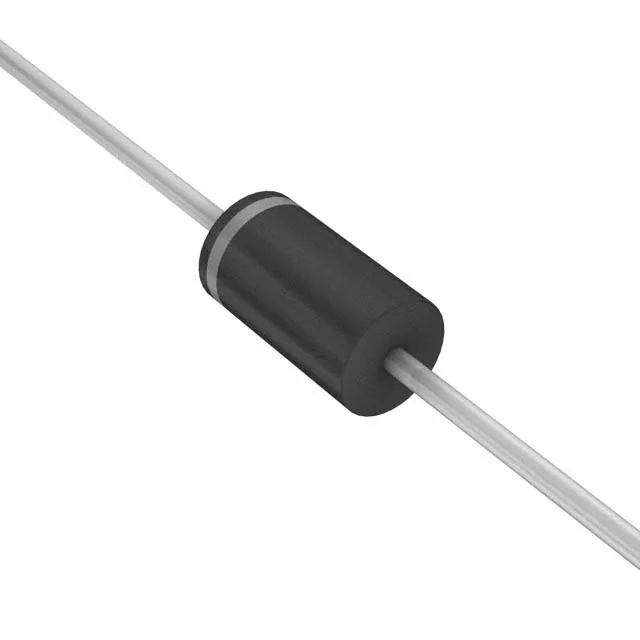
Operating junction temperature range spans -55°C to 175°C (TJ) — 15°C hotter than the standard automotive Grade 1 ceiling of 150°C. This extra headroom matters for engine-bay or transmission-mounted electronics where ambient soak temperatures push junction temperatures near 150°C; the 175°C rating provides derating margin without forced-air cooling. Housed in a DO-201AA (DO-27) axial leaded package with through-hole mounting. The axial lead form factor requires a 1.0 mm to 1.3 mm PWB hole diameter depending on the lead bend radius. The 1.5KE supplier device package footprint is standardized across the Vishay TransZorb family, so a single board layout accepts the full 1.5KE voltage range if the hole pattern and lead spacing are held constant.