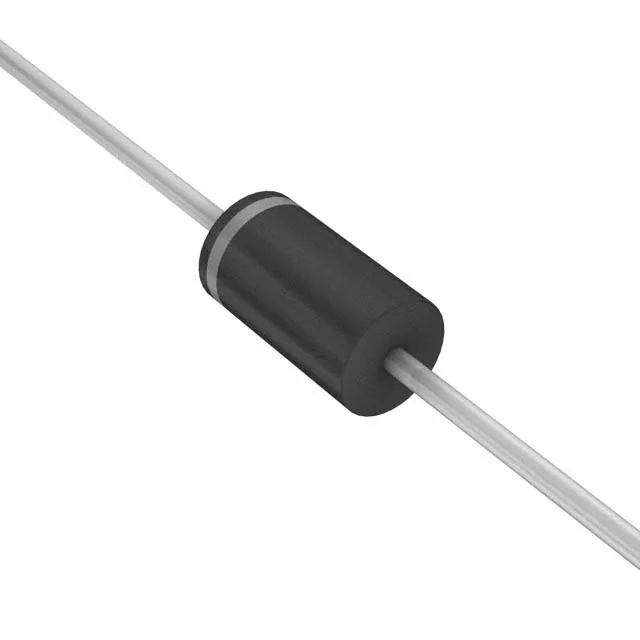
The 1.5KE150CAHE3/51: It clamps at 207 V max with a 128 V reverse standoff voltage, making it a fit for 120 V nominal rail protection in automotive or industrial DC buses.
Clamping, standoff, and the application fit
The 128 V reverse standoff voltage means this diode starts conducting only when the rail exceeds that threshold — it sits across a 120 V nominal bus without leakage at normal operating voltage. The minimum breakdown voltage is 143 V, so the avalanche region begins well above the standoff, giving margin against steady-state transients. For a 120 V bus with a 250 V-rated downstream capacitor, this clamp voltage leaves headroom; for a 150 V-rated part, the margin tightens and the capacitor's derating curve at temperature becomes the deciding factor. In automotive load-dump or inductive kickback scenarios with shorter pulse widths (8/20 µs), the device can handle significantly higher peak current, but the datasheet's derating curve for pulse duration must be consulted for the exact application.
Automotive qualification and temperature envelope
The TransZorb series is Vishay's branded silicon-avalanche TVS construction, distinct from MOV or gas-discharge technologies. It offers faster response time (sub-nanosecond) and lower clamping factor than a varistor at the same energy level, which matters when protecting sensitive electronics like ECU power inputs or sensor supply rails.
Package and board integration
The DO-201AA (DO-27) axial-leaded package is a through-hole form factor with a 1.5KE supplier device package code. The axial leads require a hole diameter of roughly 1.0 mm to 1.2 mm on the PCB, with a pad-to-pad spacing of about 8.5 mm for the body length. The leads are tin-plated copper; soldering profile follows standard SnPb or Pb-free reflow for through-hole components. Bulk packaging means the parts ship loose in a bag or tube — no tape-and-reel. For automated assembly, a tube feeder or hand-insertion station is needed; pick-and-place requires a tape carrier, which this order code does not offer.