What the 1500W peak pulse rating means for your protection design
The 1.5KE13CA-E3/54: For a 12V rail, the 11.1V reverse standoff voltage means it stays out of the circuit during normal operation and only clamps when the line exceeds 12.4V breakdown (minimum). The 18.2V clamping voltage at 82.4A peak pulse current gives you the worst-case voltage the downstream silicon must survive.
Breakdown, clamping, and standoff — the protection window
The reverse standoff voltage of 11.1V is the maximum DC or AC peak voltage the TVS can see without conducting — below this, the leakage is negligible. Breakdown starts at a minimum of 12.4V, and the clamping voltage peaks at 18.2V when the full 82.4A surge current flows. The gap between standoff and clamping defines the protection margin: a 12V bus with 10% tolerance rides at 13.2V, still below breakdown, so the diode stays off until a transient pushes it into avalanche. The -55°C to 175°C operating range covers military and industrial temperature extremes, so the same part works in outdoor telecom cabinets and engine-bay electronics.
Package and board-fit — DO-201AA axial leaded
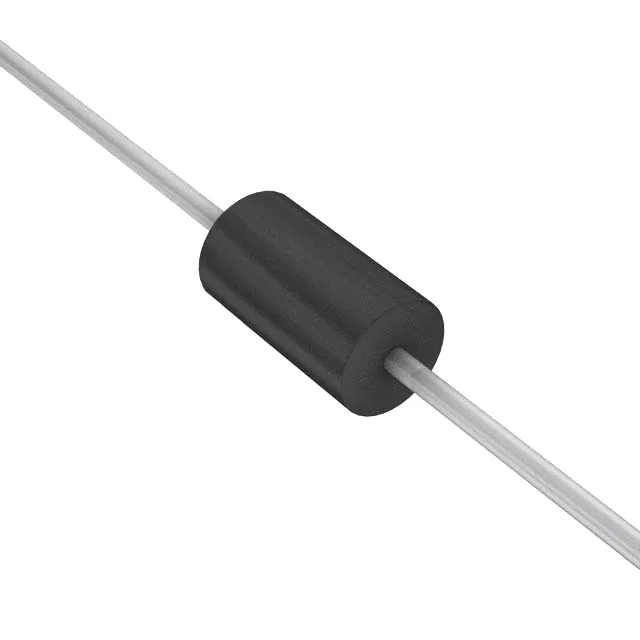
The DO-201AA (DO-27) axial package is a through-hole footprint with a 1.5KE supplier device package marking. The axial leads suit point-to-point wiring or through-hole PCB mounting with 0.042-inch diameter leads. The package body is 9.1 mm long and 5.3 mm diameter — standard for this power class. No special thermal pad or heatsink is required for single-pulse duty; the lead length and copper trace area set the thermal impedance. The /54 suffix indicates the lead-free termination finish (Matte Tin) and the 54 reel packaging — tape and reel per EIA-296 for axial components. The cut tape option is also available for smaller quantities.