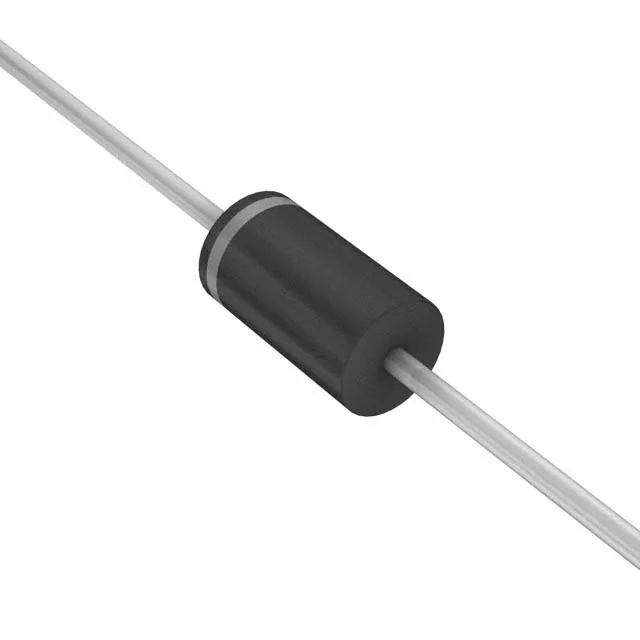
What the 1.5 kW pulse rating means on a repair bench
The 1.5KE13A-E3/73: When a transient hits the rail, it clamps at 18.2 V maximum — that 82.4 A peak pulse current gets shunted before the downstream silicon sees it. The 11.1 V reverse standoff means it sits across a 12 V or 11.1 V nominal rail without leaking appreciably.
Clamping voltage and breakdown — the numbers that decide fit
Breakdown voltage (min) is 12.4 V; the device starts conducting and clamping above that threshold. If the downstream components have a 20 V abs-max rating, there is 1.8 V of headroom at the clamp point. Reverse standoff voltage (working voltage) is 11.1 V typical. Below this the diode is effectively an open circuit; leakage is negligible at nominal rail voltage. The 11.1 V standoff makes this a fit for 12 V nominal rails where the steady-state tolerance stays under 11.1 V. Peak pulse current rating of 82.4 A (10/1000 µs waveform) tells you the surge the device can absorb without failing short. For a 1500 W rated part at 18.2 V clamp, the math works out — this is the standard TransZorb derating curve point.
DO-201AA axial package — mounting and thermal path
Through-hole DO-201AA (DO-27) axial package. The body is 1.5KE-sized — the 1.5KE series naming convention matches the package outline. Solders into a 0.040-inch diameter hole on a standard PCB or terminal strip. The 175°C Tj max is typical for a silicon TVS — the derating curve from 25°C to 175°C linearly reduces the peak pulse power. At 175°C ambient the device handles roughly 20% of the 1500 W rating.
Sourcing and compliance documentation
Vishay lists this as an active part. The base product number 1.5KE13 covers the family; the -/73 suffix indicates the lead-free / RoHS-compliant finish and the Tape & Box packaging option. Vishay provides RoHS and REACH compliance declarations for the 1.5KE series.