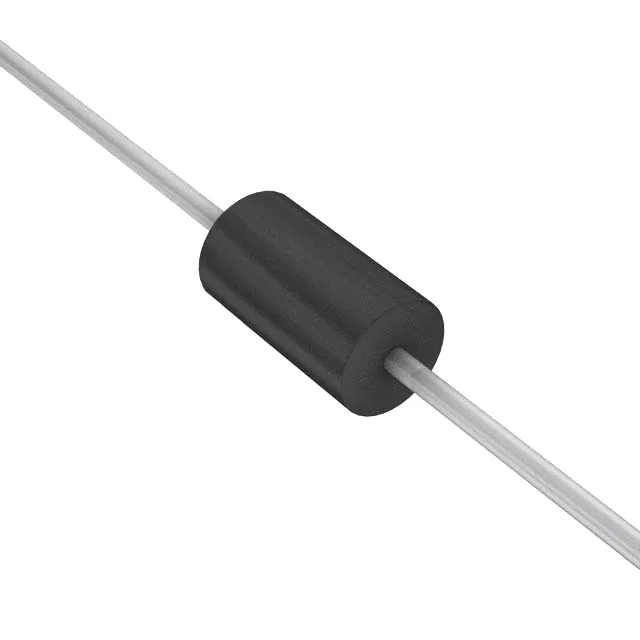
1500W bidirectional TransZorb — what the ratings mean on the bench
The 1.5KE12CA-E3/73: The 10.2V reverse standoff voltage means it sits across a 12V rail without conducting under normal conditions; when a transient exceeds 11.4V (the minimum breakdown voltage), it starts clamping.
Bidirectional single-channel — one part covers both polarities
With one bidirectional channel, this single DO-201AA axial device handles transients of either polarity — no need to pair two unidirectional TVS diodes back-to-back. The 1500W rating applies to the 10/1000µs test waveform; for shorter pulses (like 8/20µs from ESD or lightning), the peak power capability is higher, but the datasheet's derating curve governs the safe operating area at elevated temperatures.
Through-hole axial package — board-fit note for rework
Housed in a DO-201AA (DO-27) axial-lead package, it mounts through-hole. The 1.5KE footprint is standard across the series — same hole pattern as other 1.5KE parts, so swapping voltage grades on the same board layout is straightforward.
General-purpose surge suppression — no power-line rating
Vishay lists this part for General Purpose applications, and the spec explicitly states Power Line Protection: No. That means it is designed for signal and low-voltage DC rail protection (12V buses, sensor supplies, I/O lines), not for AC mains or high-energy power distribution. The 10.2V standoff suits 12V nominal systems where the rail stays below 10.2V in steady state.