1500 W bidirectional TransZorb — what the ratings mean for the BOM line
The 1.5KE11CA/54: It clamps transients at 15.6 V maximum when the peak pulse current reaches 96.2 A — that 15.6 V is the voltage the downstream silicon sees during a surge, so the protected rail must tolerate that ceiling without exceeding its abs-max rating. The reverse standoff voltage is 9.4 V, meaning it sits across a 9 V or 12 V nominal DC rail without conducting in steady state. Breakdown starts at 10.5 V minimum, giving a 1.1 V guard band between normal rail tolerance and the onset of clamping.
Obsolete — sourcing through independent distribution
Vishay lists the 1.5KE11CA/54 as obsolete.
Through-hole axial package, bidirectional, full temp range
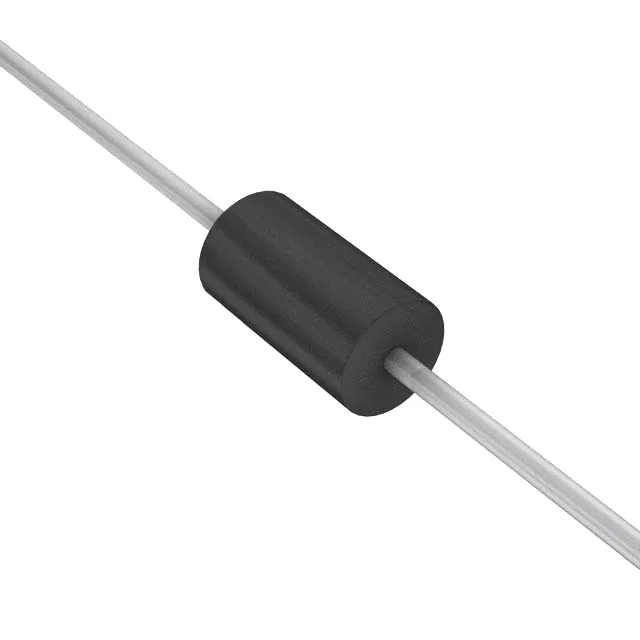
The DO-201AA / DO-27 axial package is a through-hole footprint that inserts into a 1.3 mm diameter hole on 0.5-inch lead spacing — a legacy board layout that still sees use in power supplies, telecom line cards, and military-grade assemblies where through-hole reliability is preferred over surface-mount. Operating temperature spans -55 to 175 °C junction — the full military-industrial band. A single bidirectional channel means one part handles transients of either polarity, saving board space versus two unidirectional diodes back-to-back.