What this TVS does on the board
The 1.5KE11AHE3_A/D is a unidirectional Zener-type TVS diode from Vishay's TransZorb series, qualified to AEC-Q101 for automotive use. It clamps transients up to 15.6 V at a peak pulse current of 96.2 A (10/1000 µs waveform), protecting downstream electronics from load-dump, inductive kickback, and ESD events.
Temperature range and under-hood fit
The 175°C ceiling gives margin above a 125°C ambient, so derating the peak pulse power at high case temperature is still manageable for a 1500 W device.
Package and field-service reality
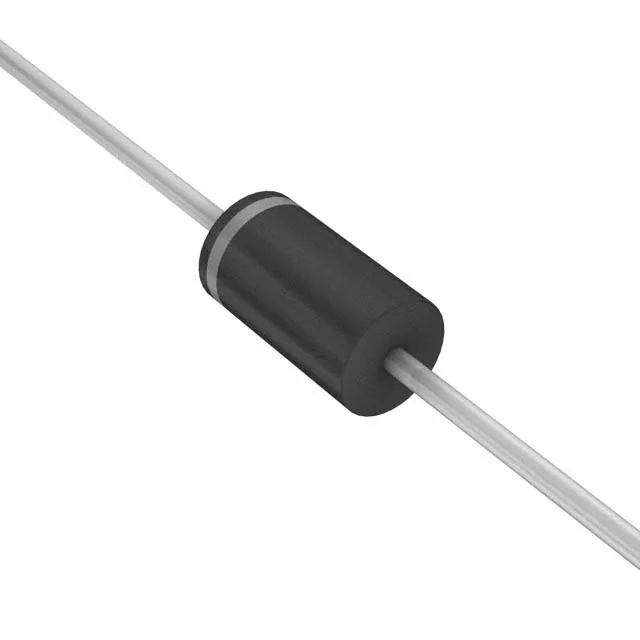
Housed in a DO-201AA (DO-27) axial leaded package, it is a through-hole part — no hot-air station needed for replacement. The leads are long enough to dress into existing PCB holes, and the body is clearly marked with the polarity band. If you carry a few of these in your field kit, you can swap a blown TVS on site with just a soldering iron and solder wick.
Sourcing and compliance
Vishay provides RoHS and REACH compliance documentation for this part; the AEC-Q101 qualification means it ships with automotive-grade traceability and PPAP-level data.