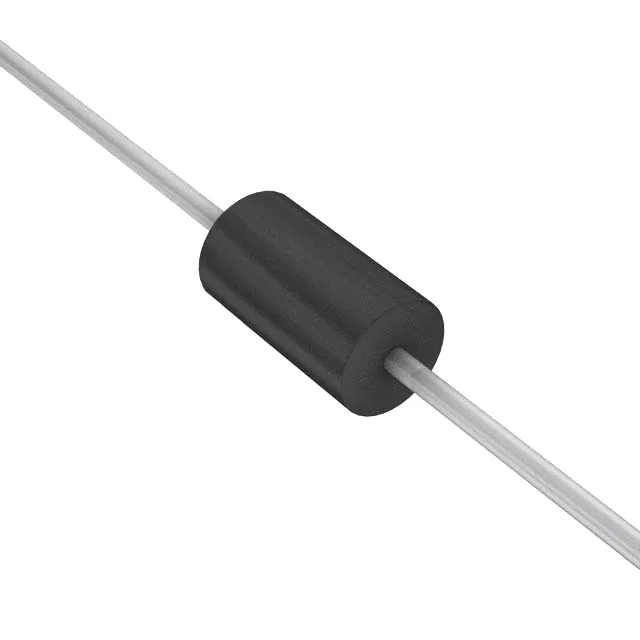
TransZorb clamping profile and board-fit
The 1.5KE110CA-E3/73: It clamps at 152 V max with a peak pulse current of 9.9 A, and its reverse standoff voltage is 94 V — the rail voltage it leaves alone until the transient arrives. The 105 V minimum breakdown voltage sits between the 94 V standoff and the 152 V clamp, so the device starts conducting just above the normal operating level and holds the line before the transient exceeds the downstream silicon's abs-max rating.
Housed in a DO-201AA (DO-27) axial-lead through-hole package, the 1.5KE110CA-/73 mounts into a plated through-hole on the board — the axial body and lead spacing suit point-to-point wiring or PCB insertion with the leads formed to the hole pitch. The single bidirectional channel means one device protects both polarities on a signal or power rail, saving a diode and a board revision compared to back-to-back unidirectional parts.
Temperature range and general-purpose duty
Marked as general-purpose application, it is not specified for power-line protection (the Power Line Protection flag is No), so it is best suited for signal, data, or low-voltage DC rail clamping rather than AC mains transient suppression.