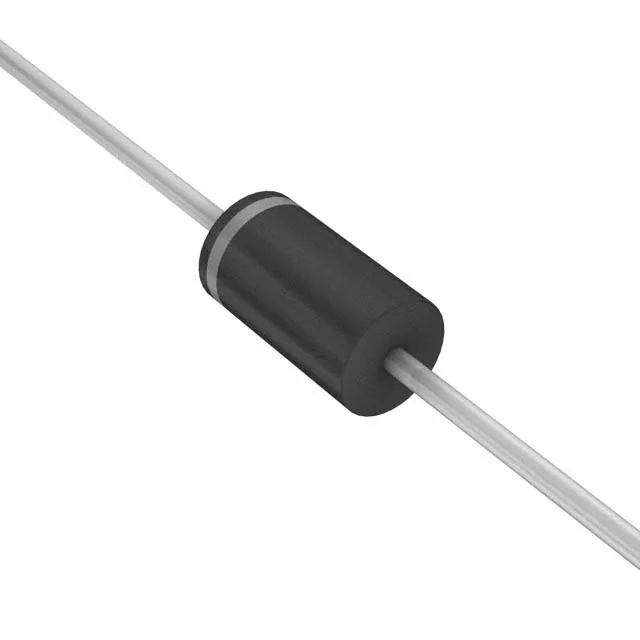
What the 1500 W peak pulse rating means on your rail
The 1.5KE11-E3/73: That 1500 W figure is the energy-handling ceiling — it tells you the device can absorb a single 92.6 A surge (the Ipp at clamp voltage) without failing, provided the pulse width stays within the standard transient shape. On a 12 V nominal rail, the 8.92 V reverse standoff voltage means the diode stays out of the circuit during normal operation and only starts conducting when the line rises above the 9.9 V minimum breakdown threshold. The clamping voltage — 16.2 V max at the rated Ipp — is the voltage the protected circuitry actually sees during a surge. If the downstream device's abs-max rating is below that clamp, the TVS alone won't protect it; you'd need a lower-clamp part or a secondary clamp stage. The 1.5KE11 is a single unidirectional channel, so it guards one polarity; for AC or bidirectional lines you'd need two devices or a bidirectional variant.
Through-hole package and board integration
Housed in a DO-201AA (DO-27) axial-lead package, the 1.5KE11-/73 is a through-hole device intended for hand-solder or wave-solder assembly. The axial leads suit point-to-point wiring, terminal blocks, or PCB mounting with the body standing off the board. The Tape & Box (TB) packaging is a bulk format — each device is taped to a carrier for automated insertion, then boxed. This is the standard shipping method for axial-lead diodes through distribution; the quantity per box varies by reel size and is confirmed at order.
Obsolete — sourcing through independent channels
For a BOM that requires this exact clamp voltage and footprint, the only reliable path is the surplus market. If a design is still in the prototyping phase, consider evaluating a current-production TVS from the same TransZorb family — the 1.5KE series shares the same package and peak power rating, but the breakdown voltage binning may differ. Pin-to-pin compatibility is not guaranteed without reviewing the alternative's datasheet.