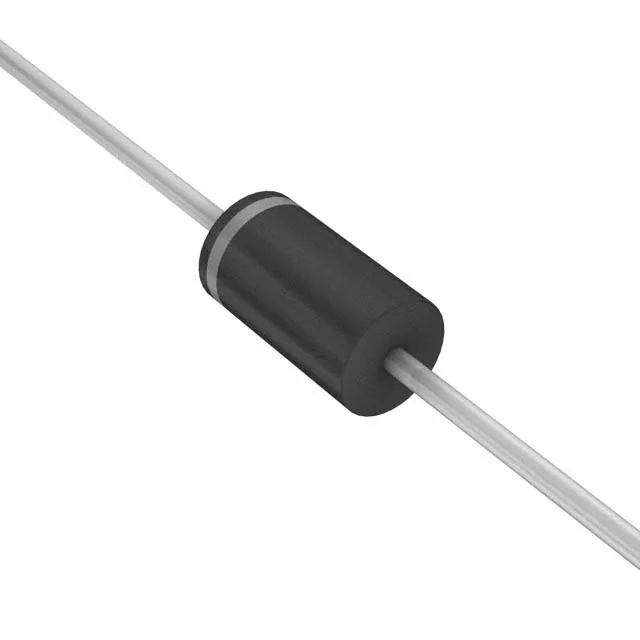
The 1.5KE10C-E3/73: Its 8.1V reverse standoff voltage and 9V minimum breakdown voltage define the protection threshold for a 5V or 3.3V rail. The single bidirectional channel means it clamps both polarities symmetrically — no orientation concern during through-hole insertion into a DO-201AA axial footprint.
1500W pulse and 100A Ipp — what the ratings mean for line protection
The 1500W peak pulse rating at 10/1000µs defines the energy the device absorbs in a single transient event before the junction temperature exceeds the 175°C absolute maximum. For a 24V nominal bus, the 8.1V standoff is too low — this part is sized for low-voltage DC rails where the steady-state voltage stays under 8.1V. 100A peak pulse current at the clamping voltage of 15V means the TVS can handle a direct lightning-induced surge on a signal line without failing short, provided the source impedance limits the total energy. The through-hole axial package handles the thermal pulse better than an equivalent SMD footprint because the lead frame sinks heat into the PCB hole plating.
Obsolete — sourcing and lifecycle posture
Vishay has marked the 1.5KE10C-/73 as Obsolete. No official successor order code is recorded, and the TransZorb family has migrated to newer package variants and higher surge ratings over successive generations. The Tape & Box (TB) packaging indicates bulk axial handling rather than reel, common for through-hole TVS in maintenance or small-lot production.