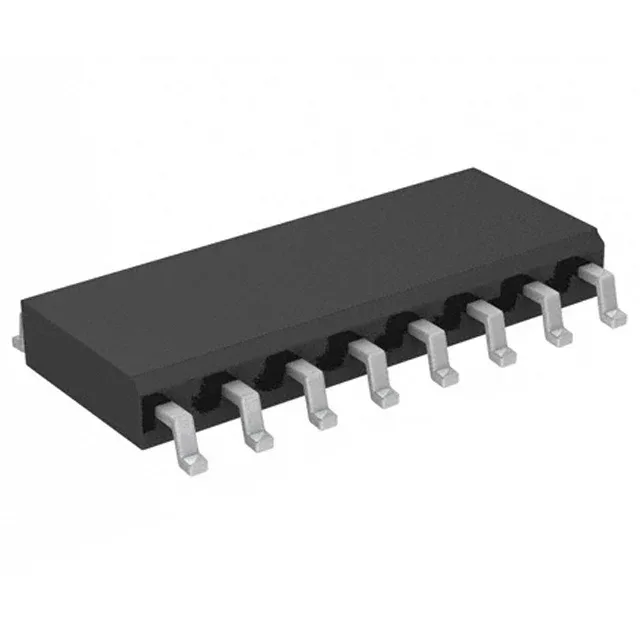
Toshiba Semiconductor 74HC238D — Discrete Semiconductors

Toshiba 74HC238D 3:8 Decoder/Demultiplexer, 16-SOIC

MPN74HC238D
End of Life

Toshiba Semiconductor 74HC series decoder/demultiplexer, 74HC238D, 1 x 3:8 circuit, 2V to 6V supply, -40°C to 125°C, 16-SOIC surface mount.

$0.44Ref. price · indicative, final on quote
Packaging16-SOIC (0.154", 3.90mm Width)
RoHSROHS3 Compliant
Series74HC
Independent supplier — new & surplus stockAuthenticity-screened · ESD-safe packingListing updated Aug 2026

Specifications

74HC238D specifications
ParameterValue
TypeDecoder/Demultiplexer
Series74HC
MountingSurface Mount
Voltage2V ~ 6V
Voltage supply sourceSingle Supply
Current - output high, low5.2mA, 5.2mA
Operating temperature-40°C ~ 125°C
Circuit1 x 3:8
PackageTape & Reel (TR); Cut Tape (CT)
Case16-SOIC (0.154\", 3.90mm Width)
Independent circuits1

Product details

3:8 decoder for address decoding and signal routing

The Toshiba 74HC238D is a 1-of-8 decoder/demultiplexer in the 74HC high-speed CMOS logic family, accepting a 3-bit binary input and asserting one of eight active-high outputs. The 1 x 3:8 circuit maps directly to address decoding in memory-mapped systems or demultiplexing serial data streams to parallel channels. The industrial temperature grade from -40°C to 125°C suits outdoor telecom, automotive cabin, and factory-floor control boards where ambient temperature swings are wide.

Output drive and package fit

The 74HC238D sources and sinks 5.2mA per output — sufficient to drive standard CMOS logic inputs, LED indicators through a series resistor, or the gate of a small-signal MOSFET. For heavier loads, the outputs should be buffered. The 16-SOIC package (0.154" body width, 3.90mm) is a common surface-mount footprint that reflows on a standard JEDEC profile and shares land patterns with many 74HC-series SOIC-16 parts. The single-supply architecture simplifies power routing — no separate VCC for input and output sections. The independent circuit count of 1 means the entire 3:8 decoding function is contained in one package, occupying a single board position.

Frequently asked questions

What is the difference between the 74HC238D and the 74HC237D?

The primary difference is the output polarity: the 74HC238 asserts active-high outputs, while the 74HC237 asserts active-low outputs. For a board originally laid out for the 237, the 238 will not drop in without a logic inversion on the output lines — the pinout is identical, but the output state is inverted.