What the XTR106P does on your board
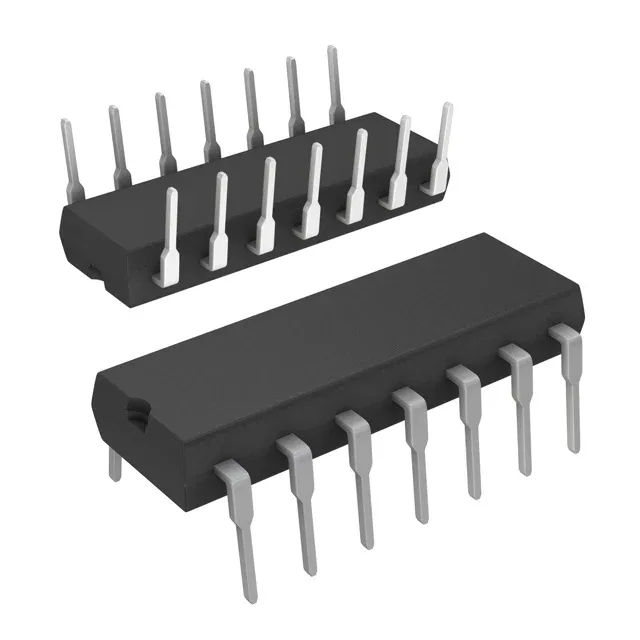
The XTR106P is a current transmitter from Texas Instruments, built to take a differential input and deliver a voltage output — the standard signal chain for sending a sensor reading across a long cable without losing accuracy to ground drops or noise pickup. Housed in a 14-lead PDIP (0.300-inch body), it mounts through-hole — a layout choice that suits prototyping, high-reliability point-to-point wiring, or boards where the thermal cycling of a large DIP package is preferred over a surface-mount part.
Supply budget and signal-chain fit
The transmitter draws 20 mA from the supply rail — that is the total quiescent plus signal current, so the loop or local regulator must budget at least that per channel before the sensor excitation. Differential input means the XTR106P rejects common-mode noise picked up on the sensor leads — a thermocouple or bridge running 10 feet of twisted pair sees the signal, not the ground offset. The voltage output stage drives into an ADC or controller input directly; no external V-to-I converter is needed if the receiver expects a voltage swing.
Lifecycle and compliance status
RoHS3 compliant per the latest EU exemption roll-up — no lead, mercury, or cadmium above the threshold limits, so it passes into European and UKCA markets without a substance-restriction waiver.