Its 1 MHz gain-bandwidth product and 0.5 V/µs slew rate place it firmly in the classic 741-class performance tier — adequate for DC-level shifting, active filtering below 100 kHz, and sensor buffering where signal bandwidth is modest. The 7 V to 36 V supply span gives flexibility across 12 V and 24 V industrial rails, but the 80 nA input bias current and 1 mV input offset voltage mean precision work (microvolt-level signals, high-gain DC paths) will need external trimming or a chopper-stabilized alternative.
Through-hole DIP — still a fit for legacy boards and prototyping
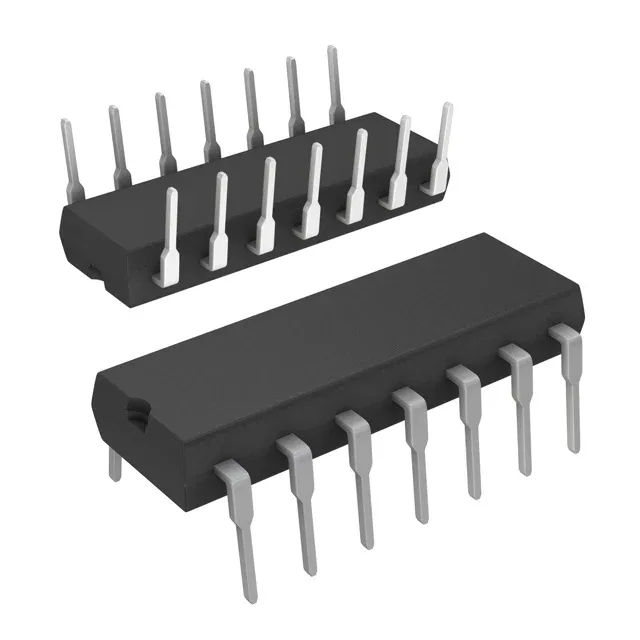
The 14-DIP (0.300", 7.62mm) package with 2.54 mm pin pitch is a through-hole footprint that mates with standard breadboards, stripboards, and sockets. If your BOM still calls for a socketed DIP op-amp — for a legacy industrial controller, an audio preamp retrofit, or a lab prototype — this package is a direct drop-in. The 14-PDIP supplier device package matches the classic 741 pinout (dual in-line, offset nulls on pins 1 and 5), so it replaces older 8-pin DIP duals with the same footprint. No reflow profile needed; hand-solder or wave-solder as usual.
Active lifecycle — no EOL pressure, but watch the package trend
That said, the through-hole DIP format is a shrinking segment — most new op-amp designs migrate to surface-mount packages (SOIC, MSOP, TSSOP). For production BOMs that still require a 14-DIP dual op-amp, this part remains a valid, factory-supported choice. The ROHS3 compliance means it ships lead-free, compatible with current assembly restrictions.