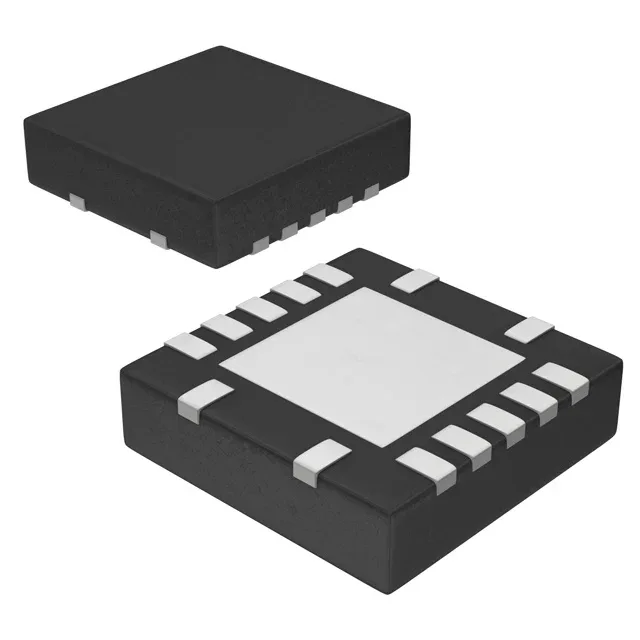
Four-channel bidirectional level shifter with auto-direction sensing
The Texas Instruments TXB0104RGYR is a 4-channel bidirectional voltage-level translator that eliminates the direction-control pin through auto-direction sensing. It shifts logic signals between a 1.2 V–3.6 V VCCA domain and a 1.65 V–5.5 V VCCB domain, covering common low-voltage cores (1.2 V, 1.8 V) and peripheral rails (3.3 V, 5.0 V) in a single IC. The 100 Mbps data rate supports SPI, UART, GPIO, and JTAG interfaces without adding bus-turnaround dead cycles.
100 Mbps — what the data rate means for bus selection
At 100 Mbps the TXB0104RGYR handles 50 MHz clock signals and most parallel or serial buses that run below that rate. SPI at 50 MHz, UART at several Mbps, and general-purpose GPIO expansion all fit comfortably. The auto-direction sensing means no direction pin to toggle, so the translator behaves transparently in the signal path — the firmware sees the same logic levels on both sides, just shifted. The tri-state, non-inverted outputs let multiple drivers share the bus without contention when the translator is disabled. For I2C applications, note that the open-drain architecture of I2C requires a translator with edge-rate acceleration or a different topology — this part is a push-pull translator and is not suitable for I2C without external pull-ups and careful timing analysis.
Dual-supply voltage ranges — bridging 1.2 V and 5.0 V domains
VCCB spans 1.65 V to 5.5 V, reaching legacy 5 V peripherals and 3.3 V I/O banks. The 1.2 V minimum on VCCA means it works with the lowest-voltage processors available today, while the 5.5 V ceiling on VCCB handles 5 V-tolerant devices without an extra regulator. Each channel is bidirectional — the direction is sensed from the driver on either side, so a single part handles mixed-direction buses like SPI (MOSI/MISO) without needing separate unidirectional translators.
The SN74LXC2T45DTTR offers bidirectional translation at 420 Mbps but is only 2-channel. Qualify the alternate against your specific footprint and direction requirements.