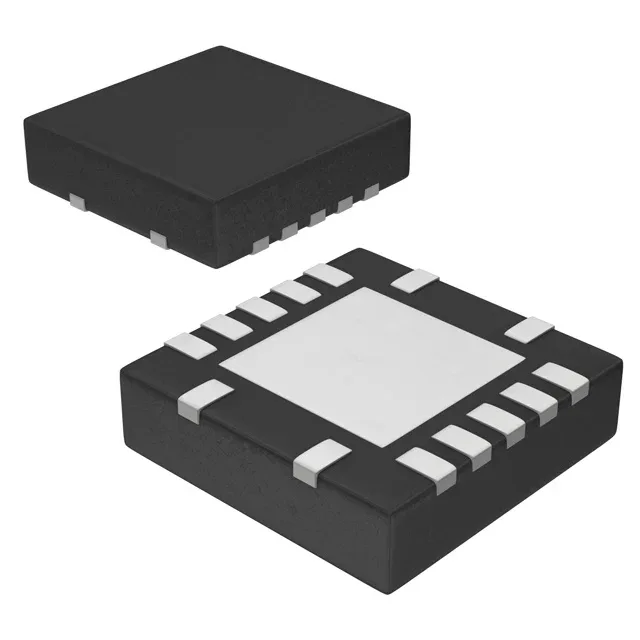
Four-channel auto-direction level shifter for automotive buses
The auto-direction feature eliminates the direction-control pin, simplifying the board layout for bidirectional buses like I2C or MDIO where the data direction changes mid-packet. Rated for 100 Mbps, it handles SPI clock rates and most parallel memory interfaces in automotive infotainment, ADAS camera modules, and body-control nodes.
100 Mbps and the drive-strength trade-off
The 100 Mbps data rate is the headline number, but the real-world throughput depends on the capacitive load on each channel. At light loads (under 30 pF) the edge rate is clean enough for 100 Mbps SPI; add a long trace or a few fan-out loads and the rise time degrades. For high-speed interfaces like SDIO or QSPI at 50 MHz+, keep the trace length under a few inches and verify the signal integrity with the actual load. The tri-state output with non-inverted logic means the channel goes high-Z when the output enable is deasserted, which is standard for shared buses where multiple transceivers drive the same line.
14-VQFN exposed pad — thermal and layout notes
Without the via stitch, the junction temperature climbs faster than the 125°C rating suggests under continuous 100 Mbps switching on all four channels. The 0.5 mm pitch limits trace escape to a single track between pads on the inner rows. Use a 0.2 mm via with 0.3 mm pad on the thermal land pattern, and keep the decoupling capacitors within 2 mm of each supply pin pair.
The AEC-Q100 qualification means it is listed in TI's automotive product portfolio and continues to be manufactured for production programs. The base product number TXB0104 covers the commercial and industrial temperature variants; the Q1 suffix marks the automotive grade.