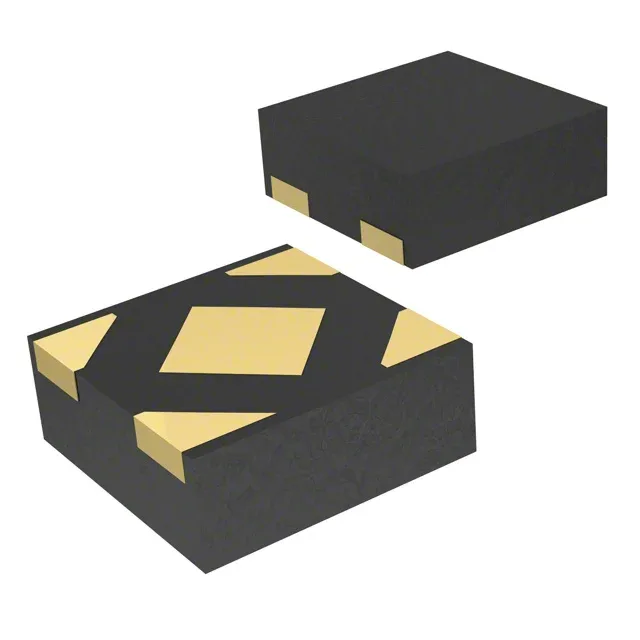
Active production — 60 nA Iq defines the battery-life envelope
The Texas Instruments TPS7A0233DQNR is an active-production LDO regulator delivering 200 mA continuous output with a fixed 3.3 V output rail. The headline number for a battery-powered design is the 60 nA quiescent current — this is the regulator's own draw when the load is light, and it sits well below the self-discharge rate of most lithium coin cells, so a sensor node that spends 99% of its time in a low-power sleep state sees negligible battery drain from the regulator itself. The dropout voltage is 310 mV maximum at the full 200 mA load, meaning the input rail needs to stay above 3.61 V to maintain regulation at the output. For a 3.7 V Li-ion cell, that headroom is tight near the end of discharge — the UVLO protection will shut the regulator down cleanly rather than letting the output sag out of spec.
PSRR and noise rejection for sensitive analog rails
The power-supply rejection ratio is 55 dB at 1 kHz. Above 100 kHz the PSRR rolls off — if the upstream DC-DC switcher runs at 2 MHz, the ripple attenuation is lower, and a post-filter LC stage between the switcher and this LDO is worth budgeting into the layout.
Control features and protection
The Enable pin allows the output to be sequenced — pulling EN low drops the output and reduces the quiescent current to near zero, which is useful for power-gating a peripheral that only wakes periodically. The current-limit feature folds back the output current under overload rather than latching off, so the regulator recovers automatically when the fault clears. Protection is comprehensive for a part this size: over-current, over-temperature, and under-voltage lockout are all integrated. No external watchdog or crowbar circuit is needed for basic fault handling — the UVLO threshold prevents the output from trying to regulate when the input is too low, which avoids the pass FET operating in the linear region and overheating.