Power management for OMAP — what the TPS65950BZXNR was built for
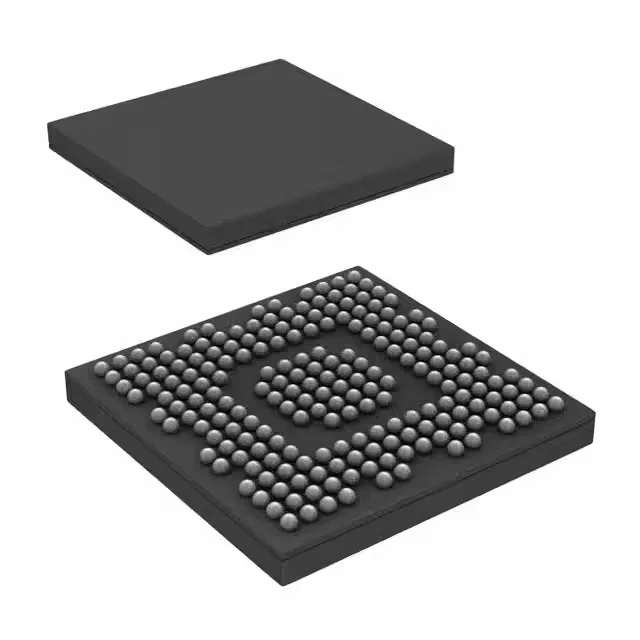
The Texas Instruments TPS65950BZXNR is a power management IC (PMIC) designed specifically for OMAP application processors in mobile devices. It integrates multiple voltage rails, battery charging, audio codec, USB transceiver, and GPIO expansion into a single 209-ball BGA package — a dense system-power solution that offloads discrete regulators and interface chips from the main board.
Supply voltage and package — fit for a single-cell Li-Ion rail
The input supply range of 2.7 V to 4.5 V covers a single-cell Li-Ion battery from near-discharge (3.0 V) through full charge (4.2 V), as well as a regulated 3.3 V rail. The 2.7 V floor means the PMIC drops out before a deeply depleted cell — a boost pre-regulator or a higher-voltage rail is needed if the system must run below that threshold. The 209-VFBGA and 209-NFBGA packages are functionally identical fine-pitch BGA arrays with 0.50 mm ball pitch. The NFBGA variant is the lead-free version. Both require a controlled-impedance PCB stack-up with via-in-pad or microvia fan-out for the inner balls — a 4-layer board minimum, and the reflow profile must match the lead-free solder ball composition (SnAgCu) with a peak temperature around 245°C.
The TPS65950BZXNR is officially obsolete. TI no longer manufactures this PMIC, and no direct replacement has been listed on the product status record. No official successor or pin-compatible cross-reference is recorded in the lifecycle data. Any substitution requires a full board redesign around a different PMIC, because the OMAP companion PMIC family (TPS65950) is a custom multi-rail part with no industry-standard footprint. If you are sourcing for a repair or legacy build, confirm the OMAP variant (OMAP3 vs OMAP4) — the TPS65950BZXNR is documented for Mobile/OMAP applications, but the exact OMAP generation compatibility should be verified against the system design.