Why this PMIC exists — automotive multi-rail safety supply
The TPS65381AQDAPTQ1 is a Texas Instruments automotive power-management IC (PMIC) that integrates five regulated outputs from a single 4.5V–36V input — covering the 12V and 24V battery rails with headroom for load-dump transients. Its AEC-Q100 and Functional Safety (FuSa) qualification means it is designed for safety-critical ECU applications where a single-point failure on the supply rail must not cause a system-level hazard. The five outputs supply the core, I/O, analog, and sensor rails for an automotive MCU or SoC.
Package and thermal — the exposed pad is non-negotiable
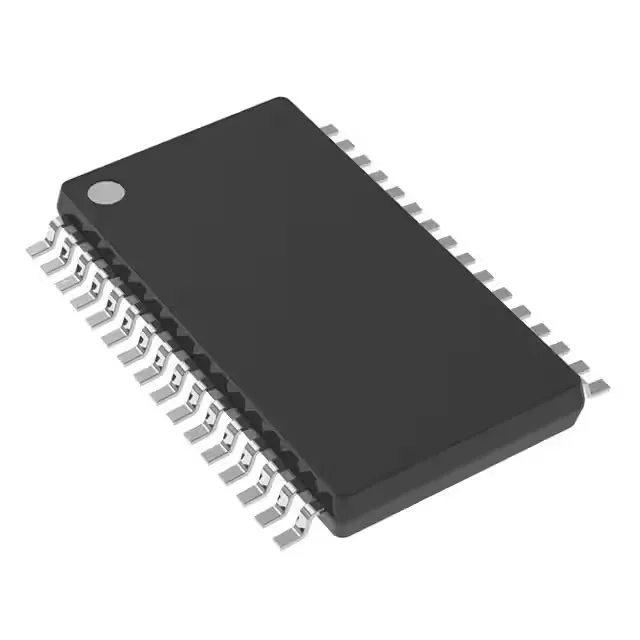
The 32-TSSOP with exposed pad (0.240-inch body width, 6.10 mm) is the thermal and electrical ground reference. Mounting is surface-mount only. The pitch is 0.65 mm — standard for this class of PMIC, but the exposed pad requires a solder-paste stencil aperture that covers at least 50% of the pad area for void-free reflow.
What the five-output count means for the BOM
Five outputs from a single IC replaces five discrete LDOs or a multi-phase switcher plus LDOs, saving board area and reducing the component count in the power-tree. The trade-off is single-source risk — if this PMIC fails in the field, all five rails drop. For safety-rated systems, the FuSa qualification includes diagnostic coverage for output undervoltage and overvoltage, which is the reason to use this part over a discrete solution. The 4.5V–36V input range means it can sit directly on the automotive battery line without a pre-boost or pre-buck.