Texas Instruments TPS65270PWPR — Power Management (PMIC / Gate Driver)

TPS65270PWPR Dual Buck Regulator 4.5V-18V 2A/3A

MPNTPS65270PWPR
Active

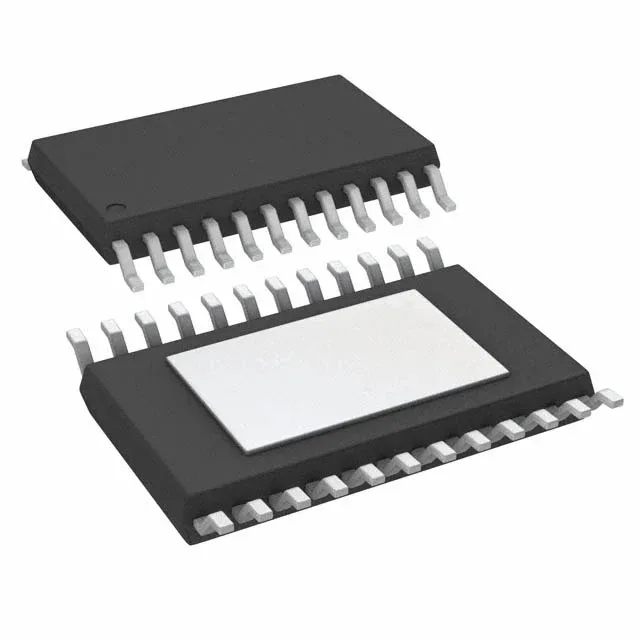
Texas Instruments TPS65270PWPR, dual synchronous buck regulator, step-down topology, adjustable output, 4.5 V to 18 V input, 2 A and 3 A outputs, 24-HTSSOP exposed-pad package.

$3.0300Ref. price · indicative, final on quote
Packaging24-TSSOP (0.173", 4.40mm Width) Exposed Pad
RoHSROHS3 Compliant
Independent supplier — new & surplus stockAuthenticity-screened · ESD-safe packingListing updated Aug 2026

Specifications

TPS65270PWPR specifications
ParameterValue
Output typeAdjustable
MountingSurface Mount
Voltage - input4.5V
Voltage - output15V
Voltage - output (Min (Fixed))0.8V
Output current2A, 3A
Frequency - switching300kHz ~ 1.4MHz
I/O channels2
Operating temperature-40°C~85°C(TA)
PackageTape & Reel (TR); Cut Tape (CT)
FunctionStep-Down
TopologyBuck
Case24-TSSOP (0.173\", 4.40mm Width) Exposed Pad
Output configurationPositive
Synchronous rectifierYes

Product details

Dual buck with asymmetric 2 A / 3 A rails

The TPS65270PWPR is a dual-channel synchronous buck regulator from Texas Instruments, each channel independently adjustable down to 0.8 V. Input range spans 4.5 V to 18 V, covering common 5 V, 9 V, and 12 V rails without a pre-regulator. The two outputs are rated 2 A and 3 A respectively — the asymmetry lets a single IC power a mixed-load board where one rail draws heavier current than the other.

Switching frequency and thermal envelope

Switching frequency is programmable from 300 kHz to 1.4 MHz via an external resistor — a lower frequency cuts switching losses but demands larger magnetics; a higher frequency shrinks the inductor footprint at the cost of higher gate-drive dissipation. The synchronous rectifier improves efficiency at heavy loads by replacing the catch diode with a low-Rds(on) FET.

Housed in a 24-TSSOP with exposed pad (HTSSOP, 4.40 mm width).

Frequently asked questions

Can TPS65270PWPR be used for a 5 V to 3.3 V conversion?

Yes. With an adjustable output down to 0.8 V, setting the feedback resistors for 3.3 V is straightforward. The 4.5 V minimum input is satisfied by a 5 V rail. The 2 A or 3 A output provides enough current for most digital loads.