3 A / 2 A / 2 A — the rail split that decides the BOM
The TPS65266-1RHBT: Each output is independently programmable, so a single part can sequence core, I/O, and auxiliary rails for an SoC or FPGA without separate regulators.
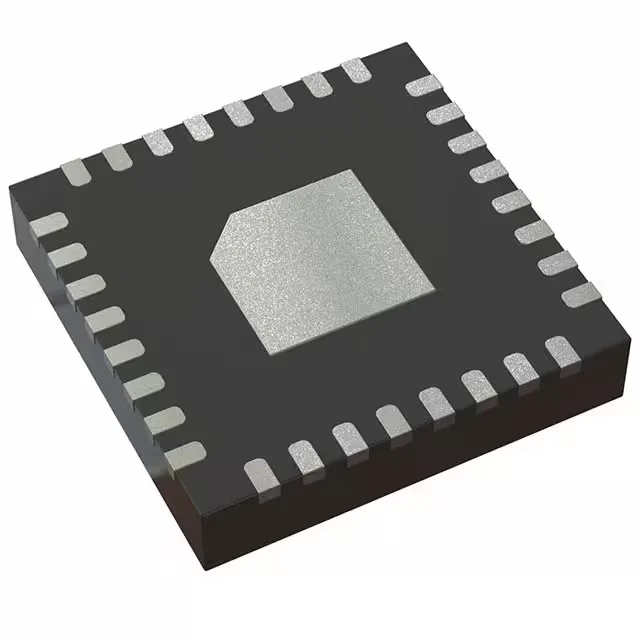
Texas Instruments TPS65266-1RHBT triple-output step-down (buck) regulator, programmable output, 3 A / 2 A / 2 A, 2.7 V to 6.5 V input, 250 kHz to 2.4 MHz switching, synchronous rectification, 32-VQFN (5x5 mm) exposed pad, -40 to 125 °C.
| Parameter | Value |
|---|---|
| Output type | Programmable |
| Mounting | Surface Mount |
| Voltage - input | 6.5V |
| Voltage - output | 6V |
| Voltage - output (Min (Fixed)) | 2.7V |
| Output current | 3A, 2A, 2A |
| Frequency - switching | 250kHz ~ 2.4MHz |
| I/O channels | 3 |
| Operating temperature | -40°C~125°C(TJ) |
| Package | Tape & Reel (TR); Cut Tape (CT) |
| Function | Step-Down |
| Topology | Buck |
| Case | 32-VFQFN Exposed Pad |
| Output configuration | Positive |
| Synchronous rectifier | Yes |
The TPS65266-1RHBT: Each output is independently programmable, so a single part can sequence core, I/O, and auxiliary rails for an SoC or FPGA without separate regulators.
Design engineers need to validate PCB layout compatibility.
Sourcing buyers need immediate availability and cost for BOM fulfillment.
Lifecycle status determines long-term availability for production and maintenance.
Brokers and buyers need alternatives when the part is scarce or end-of-life.
Engineers and procurement verify compatibility to avoid redesigns.
Manufacturing needs specific packaging for assembly processes.