Triple buck with asymmetric rail currents
The TPS65251-2RHAT is a three-channel synchronous buck regulator from Texas Instruments, configured as a step-down converter with adjustable outputs. One channel delivers 3 A, the other two 2 A each — a split that maps directly to multi-rail systems where the core logic rail pulls more current than the I/O or auxiliary supply. The minimum output is 0.8 V, adjustable up to 17 V, with synchronous rectification on all three channels.
Switching frequency: inductor size vs efficiency trade
At the low end, efficiency peaks and the inductor core losses drop — useful when the BOM has room for a larger 10 µH or 15 µH coil. At 2.2 MHz, the inductor shrinks to the 1 µH to 2.2 µH range, saving board area at the cost of higher switching losses in the FETs. The designer picks the frequency, not the part.
40-VQFN: rework and thermal reality
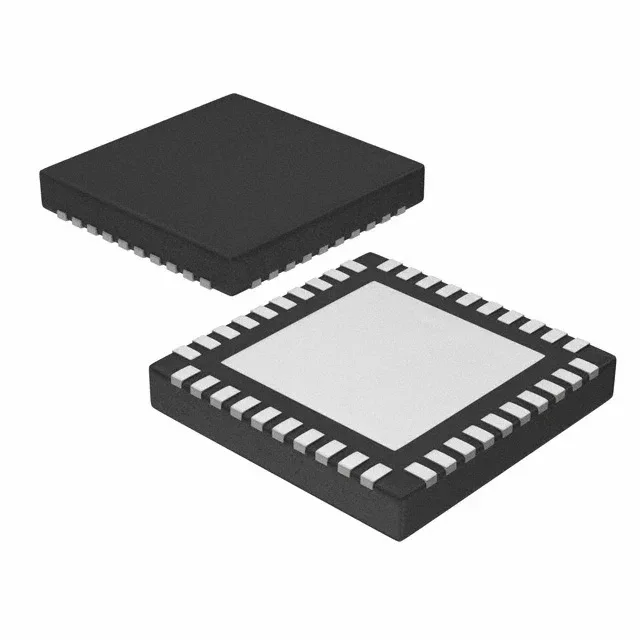
Housed in a 40-VFQFN with exposed pad, 6x6 mm body. The thermal pad under the part is the primary heat path — the board footprint must have a matching copper land with vias to the inner ground plane. Reworking a QFN this size is routine with a hot-air station if the pad layout is correct; the exposed pad centre-tab is the only alignment challenge. Pin 1 corner is marked on the top moulding — verify orientation before placement.
The wide temp range means the regulator can sit next to a hot processor or power stage without losing regulation.
Sourcing posture
No official cross-reference or second-source alternate is listed, so the BOM relies on this single MPN for the triple-buck function.