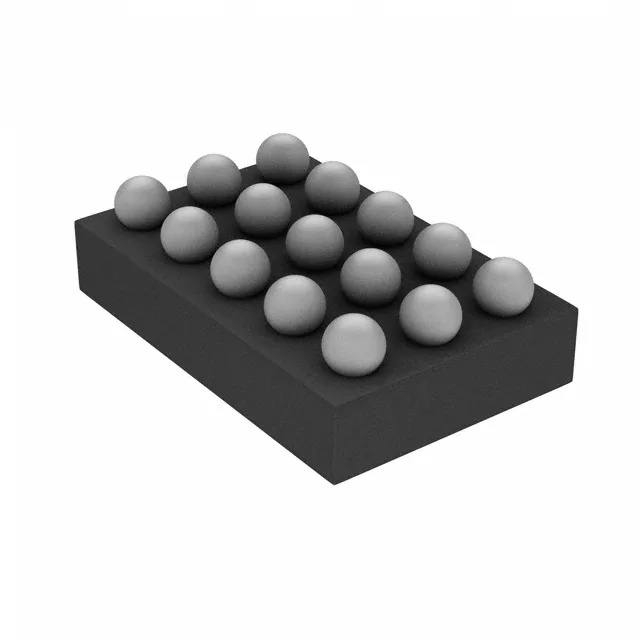
Texas Instruments TPS65132A0YFFR — Analog & Data Acquisition

TPS65132A0YFFR dual-output LCD/OLED bias driver, I²C

MPNTPS65132A0YFFR
End of Life

Texas Instruments TPS65132A0YFFR dual-output LCD/OLED bias driver, I²C interface, 2.5-5.5 V supply, 540 µA quiescent, 15-DSBGA package, -40°C to 85°C.

$1.39Ref. price · indicative, final on quote
Packaging15-UFBGA, DSBGA
RoHSROHS3 Compliant
Sourced new & surplus through independent channelsAuthenticity-screened · ESD-safe packingListing updated Aug 2026

Specifications

TPS65132A0YFFR specifications
ParameterValue
Display typeLCD, OLED
MountingSurface Mount
Voltage2.5V ~ 5.5V
Current - supply540 µA
InterfaceI²C
Operating temperature-40°C ~ 85°C
PackageTape & Reel (TR); Cut Tape (CT)
Case15-UFBGA, DSBGA

Product details

Dual-output bias supply for small-panel displays

The TPS65132A0YFFR is a dual-output bias driver from Texas Instruments, purpose-built for LCD and OLED displays that need separate positive and negative supply rails from a single IC. It integrates both outputs in a 15-bump DSBGA package, saving board area compared to a discrete boost-plus-inverter solution. Quiescent current is 540 µA — low enough that a battery-powered wearable or handheld display controller can leave the bias supply enabled continuously without draining the pack overnight.

I²C control and temperature grade

The output voltages are programmed over an I²C interface — the same bus that often handles the display controller or touchscreen IC, so no extra GPIOs are needed. The supplier device package is 15-DSBGA — same die, same bump map, just the TI ordering suffix for the tape-and-reel option.

Active lifecycle — no LTB pressure

The tape-and-reel (TR) and cut-tape (CT) packaging options cover volume reflow and prototype builds from the same reel.

Frequently asked questions

Does TPS65132A0YFFR support I²C communication?

Yes, the TPS65132A0YFFR uses an I²C interface to program the dual output voltages. This is the same bus commonly used by display controllers and touchscreen ICs, so no additional control lines are required.