Automotive PMIC for single-cell Li-Ion rails
The TPS65023QRHARQ1 is a single-cell lithium-ion/polymer power management IC from Texas Instruments, part of the Automotive AEC-Q100 series. It integrates multiple voltage rails and sequencing for a processor core, I/O, and memory from a single battery cell.
Package and board-fit — 40-VQFN with exposed pad
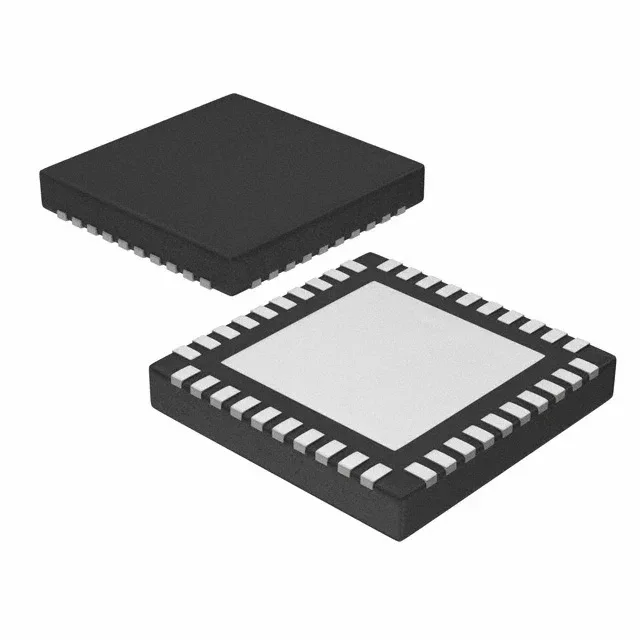
Housed in a 40-VFQFN Exposed Pad package (6x6 mm body, supplier package 40-VQFN), the thermal pad underneath must be soldered to a copper land on the PCB to pull heat from the internal power FETs. The exposed paddle is the main thermal path — without a proper via array to a ground plane, junction temperature rises above the 125°C ceiling under continuous load. The QFN package reworks well under hot air if the board has a solder mask defined pad and the via tenting is opened.
I²C interface and fault protection
The I²C interface allows the host processor to adjust output voltages dynamically, sequence power-up and power-down, and read back fault status. This is useful in automotive infotainment or ADAS modules where the core voltage changes with the processor's P-state. On-chip over-temperature protection shuts down the regulator if the die exceeds the thermal limit — the part latches off until the I²C bus clears the fault or the input power cycles. There is no over-voltage or over-current protection listed in the fault block, so the external inductor and capacitor must be rated for the full battery transient.