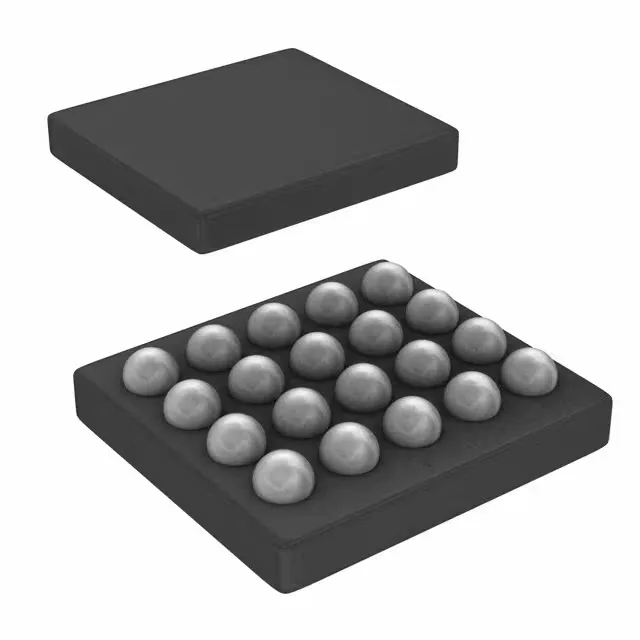
The TPS63901YCJR is a synchronous buck-boost regulator from Texas Instruments that accepts a 1.8 V to 5.5 V input and delivers up to 400 mA at a programmable output voltage between 1.8 V and 5 V. The switching frequency spans 4 Hz to 2 MHz, which lets the designer tune for efficiency at light load or shrink the inductor at higher switching rates.
400 mA output in a 1.46 × 1.11 mm DSBGA
The 12-DSBGA package (1.46 × 1.11 mm) is the smallest footprint for a 400 mA buck-boost in TI's portfolio—critical when board real estate is the constraint, as in wearable or IoT sensor nodes. Compared to the LMR33630APCQRNXRQ1, a 3 A buck converter in a larger package, the TPS63901YCJR trades output current for a much smaller solution size and the ability to both step up and step down from a single battery cell.
Active production — no end-of-life watch
Design-in checklist for the DSBGA footprint
The 12-XFBGA DSBGA package requires a PCB fab capable of via-in-pad or microvia fan-out for routing supply and output traces. Input voltage range from 1.8 V to 5.5 V covers a single Li-ion cell (3.0 V to 4.2 V) and standard 3.3 V or 5 V rails, so no pre-regulator is needed in most battery-powered designs.