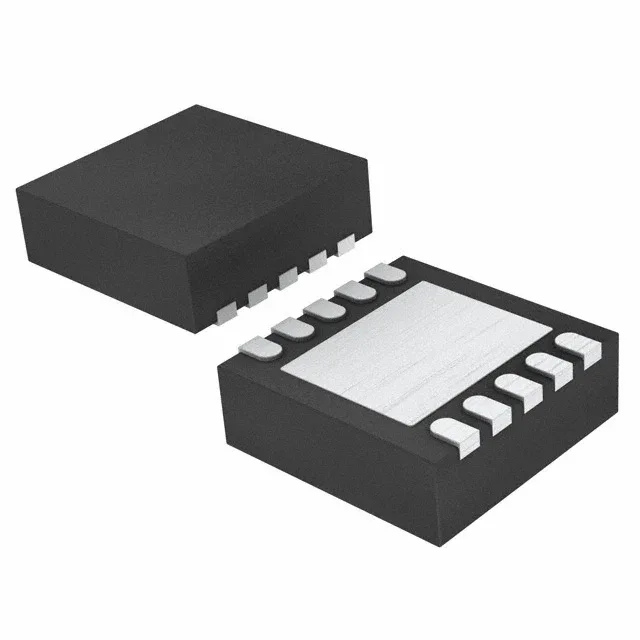
Fixed 3.3 V buck-boost — one inductor covers the Li-Ion discharge curve
The TPS63031DSKT: That input window covers a single-cell Li-Ion battery from full charge (4.2 V) down to its end-of-discharge (around 3.0 V), plus 5 V USB rails and 3.3 V logic supplies. The 900 mA switch current limit sets the maximum output current — at 3.3 V out from a 3.0 V input, expect roughly 600 mA continuous before the switch hits its limit; from a 5 V input the headroom is higher.
2.4 MHz switching — inductor shrinks, but layout discipline matters
The 2.4 MHz switching frequency lets the designer use a small 1 µH to 2.2 µH inductor, saving board area in space-constrained designs. The trade-off: the fast edges demand a tight layout — the input capacitor and inductor loop must stay under 5 mm trace length to keep switching noise off the output. The synchronous rectifier (integrated low-side FET) eliminates the external Schottky diode, reducing BOM count and improving efficiency at light loads.
That means no last-time-buy deadline and no forced redesign for the foreseeable production horizon.