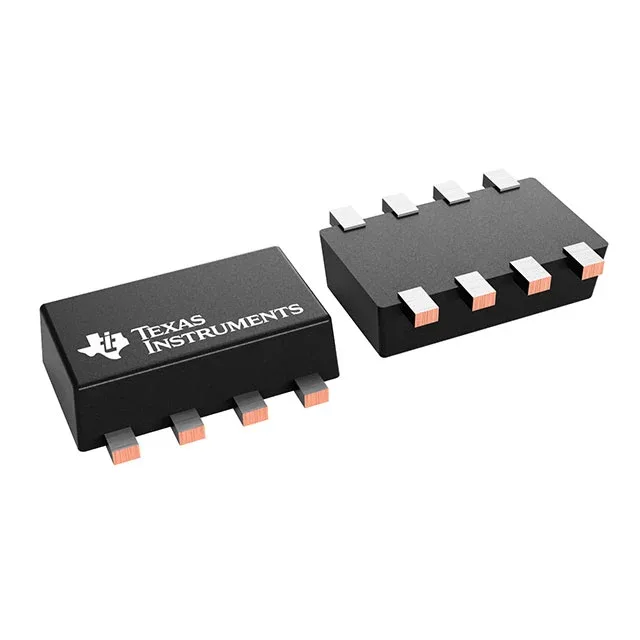
Buck regulator in a small SOT-583 — what it covers
The Texas Instruments TPS62933PDRLR is a synchronous step-down (buck) regulator delivering up to 3 A from a 3.8 V to 30 V input rail. The switching frequency is programmable between 200 kHz and 2.2 MHz via a single resistor to ground, letting you balance efficiency against inductor size and EMI filter design. Internal synchronous rectification eliminates the freewheeling Schottky diode, shrinking the BOM count and improving light-load efficiency. The SOT-583 package keeps the footprint small — useful when board area is tight, as in automotive ECU modules, industrial sensors, or distributed power architectures.
Switching frequency — the efficiency vs. size trade-off
The programmable frequency from 200 kHz to 2.2 MHz lets you choose: lower frequencies reduce switching losses (better efficiency at heavy load) but require larger inductors and output capacitors; higher frequencies shrink the passives and push switching harmonics above the AM band, easing EMI compliance. The RT pin resistor sets the frequency per the datasheet curve. Note that the upper end (2.2 MHz) may conflict with sensitive RF bands if the layout is not shielded — plan your PCB stack-up accordingly.
ROHS3 compliance is confirmed. For new designs, this part is a safe selection from a lifecycle standpoint — no imminent obsolescence risk.