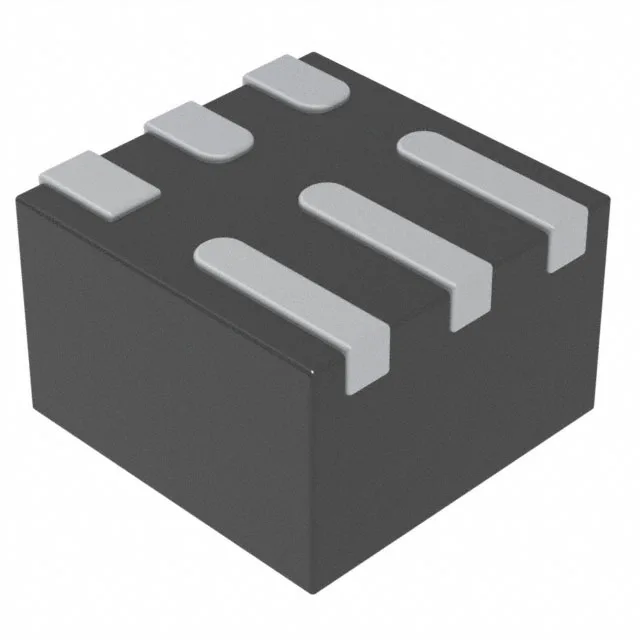
Texas Instruments TPS6282618DMQR — Power Management (PMIC / Gate Driver)

TPS6282618DMQR Texas Instruments Buck Converter, 3A

MPNTPS6282618DMQR
Active

Texas Instruments TPS6282618DMQR step-down buck converter, 3 A output, 1.8 V fixed, 2.4 V to 5.5 V input, 2.2 MHz switching, 6-VSON-HR (1.5x1.5) package, Tape & Reel.

$1.6800Ref. price · indicative, final on quote
Packaging6-VFDFN
RoHSROHS3 Compliant
Independent supplier — new & surplus stockAuthenticity-screened · ESD-safe packingListing updated Aug 2026

Specifications

TPS6282618DMQR specifications
ParameterValue
Output typeFixed
MountingSurface Mount
Voltage - input5.5V
Voltage - output (Min (Fixed))1.8V
Output current3A
Frequency2.2MHz
I/O channels1
Operating temperature-40°C~125°C(TJ)
PackageTape & Reel (TR); Cut Tape (CT)
FunctionStep-Down
TopologyBuck
Case6-VFDFN
Output configurationPositive
Synchronous rectifierYes

Product details

3 A step-down for tight 1.8 V rails

The TPS6282618DMQR: The 2.2 MHz switching frequency keeps the inductor small, which matters when board area is tight around a 1.8 V core or I/O supply. With the synchronous rectifier integrated, external Schottky diodes are unnecessary — the efficiency curve stays above 90% across most of the load range, and the 6-VSON-HR package (1.5x1.5 mm) lets the converter sit close to the load without a long power trace.

Input range and thermal envelope

The -40°C to 125°C junction temperature range qualifies it for industrial enclosures and outdoor telecom gear where ambient temperatures push past 85°C. Without that thermal via array, the 3 A output at high ambient will hit the thermal shutdown threshold sooner than the current limit.

The base product number TPS6282618 covers the fixed 1.8 V output variant; other fixed voltages in the same family share the same pinout and package, so a BOM change to a different output voltage does not require a board respin.

Frequently asked questions

Is TPS6282618DMQR compatible with a 5V input?

The 2.2 MHz switching frequency and internal compensation are designed for that input voltage range.