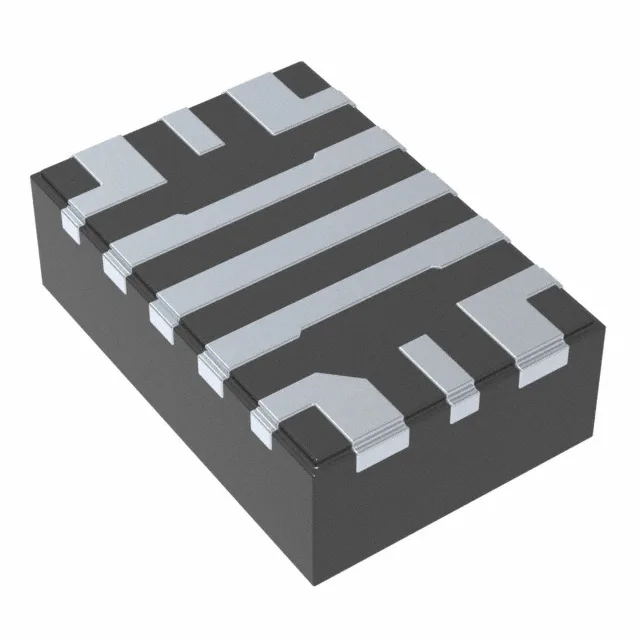
Texas Instruments TPS6281126QWRWYRQ1 — DC-DC Power Modules

TPS6281126QWRWYRQ1 Automotive Buck Regulator, 1A, AEC-Q100

MPNTPS6281126QWRWYRQ1
Active

Texas Instruments TPS6281126QWRWYRQ1, Automotive AEC-Q100, Buck Step-Down DC-DC Converter, 1A Output, Fixed 1V, 2.75V-6V Input, 1.8MHz-4MHz Switching, -40°C to 125°C, 9-VFQFN-HR (3x2) Surface Mount Wettable Flank.

$2.3200Ref. price · indicative, final on quote
Independent supplier — new & surplus stockAuthenticity-screened · ESD-safe packingListing updated Jul 2026

Specifications

TPS6281126QWRWYRQ1 specifications
ParameterValue
SeriesAutomotive, AEC-Q100
Output typeFixed
MountingSurface Mount, Wettable Flank
Voltage - input2.75V
Voltage - output (Min (Fixed))1V
Output current1A
Frequency - switching1.8MHz ~ 4MHz
I/O channels1
Operating temperature-40°C~125°C(TA)
PackageTape & Reel (TR); Cut Tape (CT)
FunctionStep-Down
TopologyBuck
Case9-VFQFN
Output configurationPositive
Synchronous rectifierYes

Product details

1 A synchronous buck for automotive power rails

It operates from a 2.75 V to 6 V input rail and delivers a regulated 1 V output — sized for powering low-voltage core rails in automotive ECUs, ADAS sensors, and infotainment domains.

Switching frequency and inductor selection

Switching frequency covers 1.8 MHz to 4 MHz, letting the designer trade inductor size against switching losses. At 4 MHz the inductor can drop below 1 µH, shrinking the footprint for space-constrained automotive modules.

The AEC-Q100 qualification adds the stress-tested reliability required for automotive production lines — no additional screening needed for Tier-1 builds.

9-VFQFN-HR with wettable flank

Packaged in a 9-pin VFQFN-HR measuring 3 mm × 2 mm, with wettable flank terminals. The wettable flank allows automated optical inspection (AOI) of the solder joints after reflow — a requirement for automotive-quality QFN assembly that standard smooth-side QFNs cannot meet.

Frequently asked questions

Is TPS6281126QWRWYRQ1 AEC-Q100 qualified?

Yes, it carries an Automotive, AEC-Q100 qualification, making it suitable for automotive-grade designs without additional stress testing.