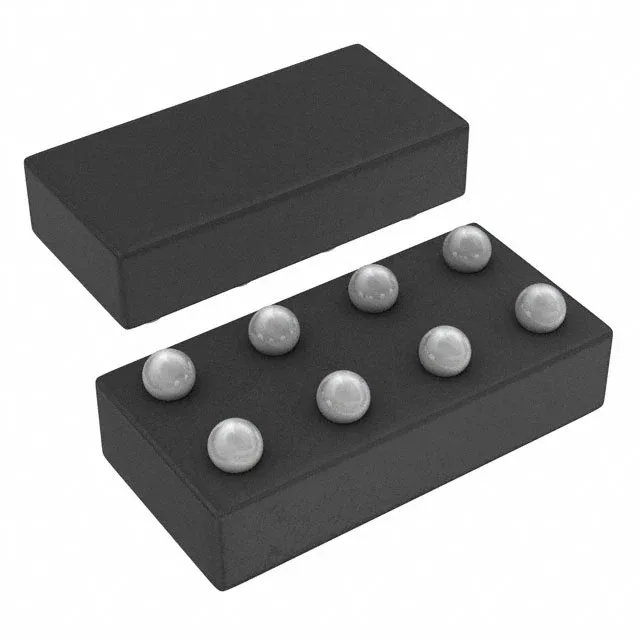
Texas Instruments TPS62746YFPR — Power Management (PMIC / Gate Driver)

TI TPS62746YFPR Step-Down Converter, 300 mA, 1.2 MHz

MPNTPS62746YFPR
Active

Texas Instruments DCS-Control™ series, TPS62746YFPR, Step-Down Buck converter, 300 mA output, 1.2 MHz switching, programmable 1.2V/1.8V output, 8-DSBGA package, -40°C to 85°C.

$1.6200Ref. price · indicative, final on quote
Packaging8-XFBGA, DSBGA
RoHSROHS3 Compliant
SeriesDCS-Control™
Independent supplier — new & surplus stockAuthenticity-screened · ESD-safe packingListing updated Aug 2026

Specifications

TPS62746YFPR specifications
ParameterValue
SeriesDCS-Control™
Output typeProgrammable
MountingSurface Mount
Voltage - input2.15V
Voltage - output (Min (Fixed))1.2V, 1.8V
Output current300mA
Frequency1.2MHz
I/O channels1
Operating temperature-40°C~85°C(TA)
PackageTape & Reel (TR); Cut Tape (CT)
FunctionStep-Down
TopologyBuck
Case8-XFBGA, DSBGA
Output configurationPositive
Synchronous rectifierYes

Product details

What this regulator does on your rail

The Texas Instruments TPS62746YFPR is a synchronous step-down (buck) converter from the DCS-Control family, delivering up to 300 mA from a 2.15 V to 5.5 V input rail. The synchronous rectifier (internal FETs for both high-side and low-side) improves efficiency across the load range, especially at light loads where battery-powered designs spend most of their time.

Where it fits

Minimum input voltage is 2.15 V.

Frequently asked questions

Can TPS62746YFPR be used for battery-powered devices?

Yes. The 2.15 V minimum input voltage lets it operate from a single Li-ion cell down to its near-discharge voltage, and the synchronous rectifier maintains high efficiency at light loads, which extends battery run time.

What are alternatives or equivalents to TPS62746YFPR?

For a higher-current rail, the LMR33630APCQRNXRQ1 is a 3 A automotive-grade buck converter, but it operates at 2.1 MHz and comes in a different package (wettable flank QFN). It is not a pin-compatible drop-in; the comparison is at the system-level power budget, not the footprint.