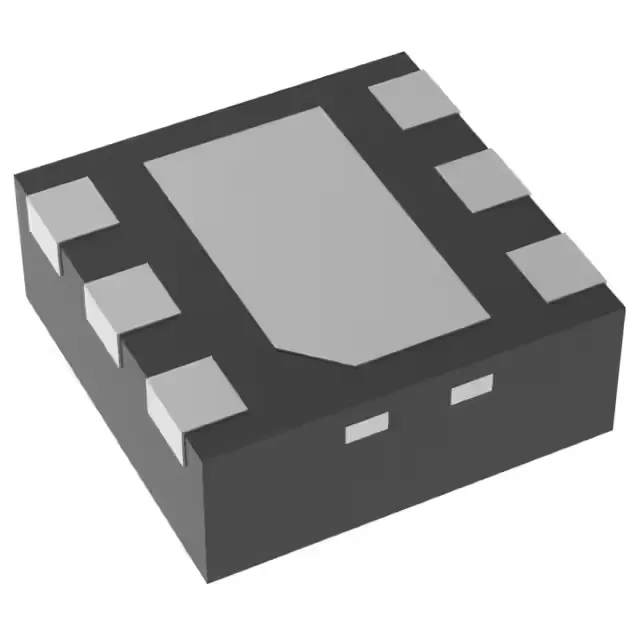
600 mA synchronous buck in a 2x2 mm WSON
The Texas Instruments TPS62560DRVT is a 600 mA adjustable step-down (buck) converter with integrated synchronous rectification, switching at 2.25 MHz.
Input range and output headroom — what fits the rail
The 2.5 V minimum input lets this converter run directly from a single Li-ion cell (3.0 V to 4.2 V) or a 3.3 V rail. The 5.5 V maximum input covers 5 V ±10 % rails, but not 12 V or higher buses — that would need a different part. The adjustable output goes from 0.85 V up to 5.5 V, so it can power a 1.2 V core rail, a 1.8 V I/O rail, or a 3.3 V peripheral rail from the same input.
Switching frequency and inductor selection
At 2.25 MHz the converter can use a small inductor — typically 1 µH to 2.2 µH in a 0805 or 1210 footprint — which shrinks the total solution area. The trade-off is higher switching losses than a 500 kHz part, so efficiency peaks around 200 mA to 400 mA load and drops at very light loads. For always-on circuits drawing under 1 mA, a lower-frequency converter might save more battery life.
It is not qualified to AEC-Q100, so it does not carry automotive-grade certification for under-hood or chassis-domain applications.
Package and thermal layout
The 0.50 mm pitch WSON demands a well-controlled solder-paste stencil; a 4-layer board with a ground plane under the pad is the standard recommendation.