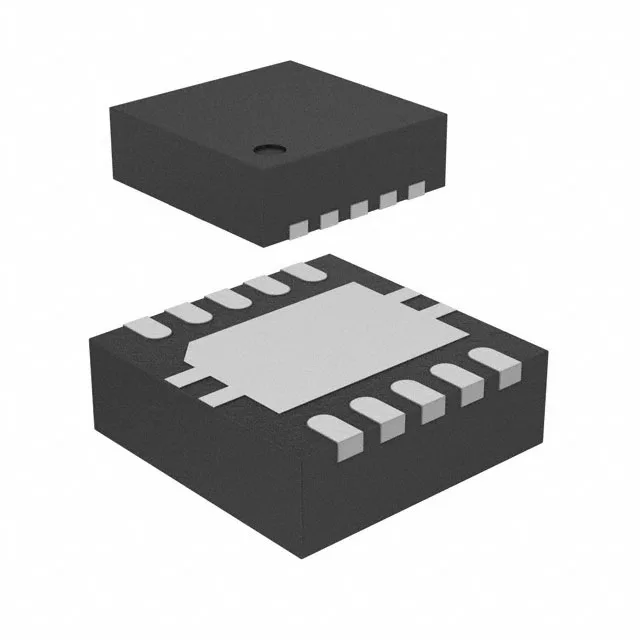
Dual-rail power in a 3x3 mm footprint
The TPS62401DRCRG4 is a dual synchronous step-down (buck) converter from Texas Instruments that delivers 400 mA on one output and 600 mA on the other, both programmable via external resistor dividers. Input range runs from 2.5 V to 6 V, so it pairs directly with a single Li-ion cell or a 3.3 V/5 V rail.
Which rail gets which load
The 400 mA output typically feeds the analog or I/O section — think op-amp rails, ADC reference, or low-power sensor supply — while the 600 mA channel handles the digital core, RF PA, or a higher-current peripheral. Output voltage is set with a resistor divider per channel. The fixed options listed are 1.1 V, 1.575 V, and 1.8 V, but the programmable nature means you can dial in any voltage within the range using the feedback resistors — handy when you are powering a 1.2 V FPGA core on one rail and a 1.8 V memory on the other.
Layout gotcha: the exposed pad
Layout engineers should budget a 3x3 mm area under the part with at least four vias to the ground plane.