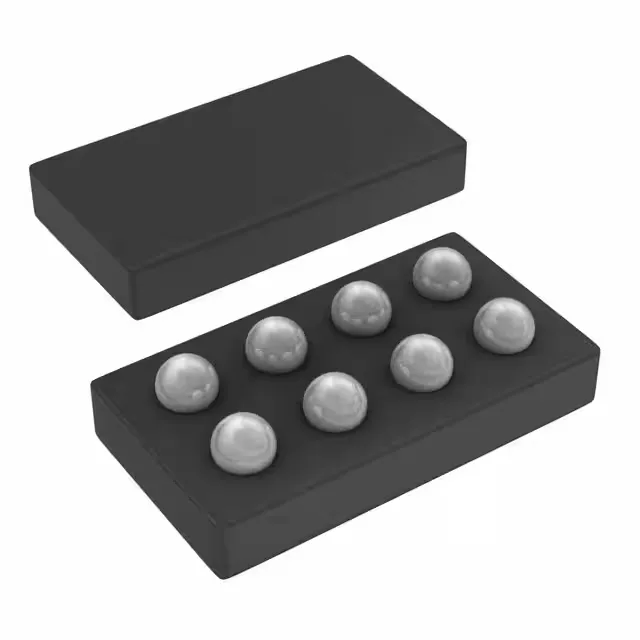
3 MHz buck regulator in a 0.8 mm² footprint
The TPS62320YEDR is a synchronous step-down converter from Texas Instruments that switches at 3 MHz, letting you use a 1 µH inductor and small ceramic caps to keep the total solution footprint tight. The 8-DSBGA package measures roughly 1.5 mm × 1.5 mm — about the area of a grain of rice — which is why this part shows up in compact battery-powered gear and portable devices where board real estate is the binding constraint.
Sourcing an obsolete part — what to expect
Layout considerations for the 8-DSBGA
The 8-DSBGA (0.5 mm pitch, 0.3 mm ball diameter) demands a controlled reflow profile — the small solder balls are sensitive to paste volume and placement accuracy. Input and output capacitors should sit within 2 mm of the respective balls to keep the switching loop small at 3 MHz.
What the 3 MHz switching buys you
At 3 MHz the converter operates well above the AM radio band, which simplifies filtering in RF-sensitive designs. The trade-off is higher switching losses — expect efficiency to peak around 85-90% at moderate loads rather than the 95%+ you get from a 500 kHz part. The synchronous rectifier helps keep the efficiency curve flat down to light loads, which matters for battery-powered applications that spend most of their time in standby.