Fixed 1.8 V rail — no divider resistors needed
The TPS62231DRYR is a step-down (buck) converter from Texas Instruments with a fixed 1.8 V output — no external feedback divider required. That saves two resistors and a feedback-node trace, which matters when the board area is tight and the BOM count is under pressure. Switching at 3 MHz, the converter lets you use a small inductor (typically 2.2 µH or 1 µH) and ceramic output capacitors, keeping the total solution footprint under 10 mm². The 500 mA output current covers low-power wireless SoCs, sensor modules, and auxiliary 1.8 V rails in mixed-voltage systems.
3 MHz switching — small passives, tight layout
At 3 MHz, the switching frequency sits above the AM broadcast band and pushes the fundamental ripple into a range where a 4.7 µH inductor and 10 µF ceramic cap give sub-10 mV output ripple. The trade-off is higher switching losses at light load — expect around 85% efficiency at 1 mA output, climbing to 90%+ above 50 mA.
6-UFDFN package — reflow and layout notes
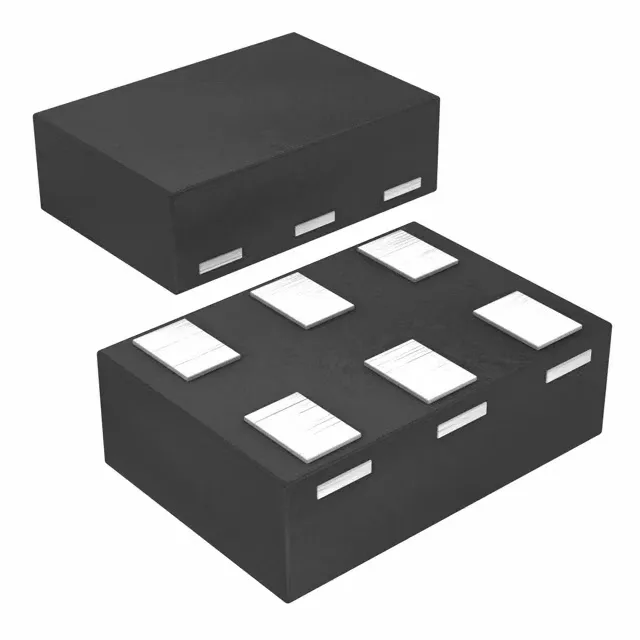
Housed in a 6-pin UFDFN (1.45 mm × 1.0 mm body, 0.5 mm pitch), the TPS62231DRYR demands a solid thermal pad on the PCB — the exposed pad on the bottom is the main heat path. The 6-SON (1.45×1) supplier device package footprint is shared across the TPS6223x family, so a single PCB land pattern covers the fixed-output variants (1.2 V, 1.5 V, 1.8 V, 2.5 V, 3.3 V) if you want to qualify an alternate output voltage on the same board.
The base product number TPS62231 covers multiple fixed-output voltages and package options (DRY, DRYR).