Texas Instruments TPS622319DRYT — Power Management (PMIC / Gate Driver)

TPS622319DRYT Buck Converter 500mA 2MHz Texas Instruments

MPNTPS622319DRYT
Active

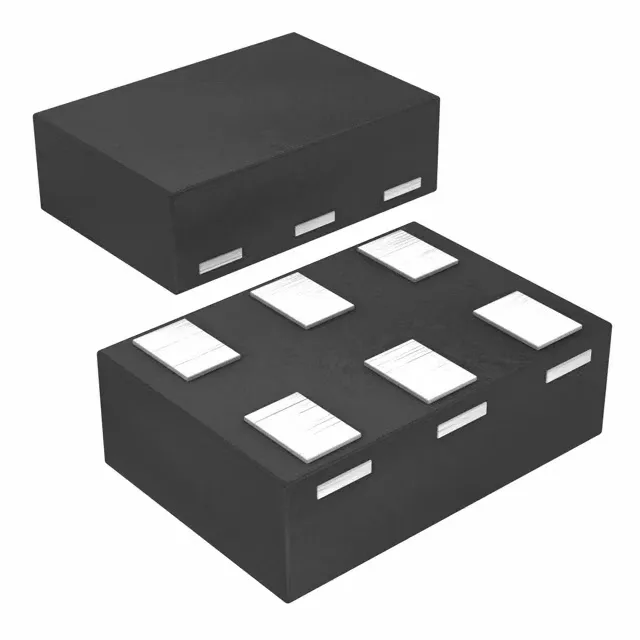
Texas Instruments TPS622319DRYT, step-down buck regulator, fixed 1.2V output, 500mA, 2MHz switching, 6-SON (1.45x1) package, -40°C to 125°C junction temperature.

$1.6100Ref. price · indicative, final on quote
Packaging6-UFDFN
RoHSROHS3 Compliant
Independent supplier — new & surplus stockAuthenticity-screened · ESD-safe packingListing updated Aug 2026

Specifications

TPS622319DRYT specifications
ParameterValue
Output typeFixed
MountingSurface Mount
Voltage - input2.05V
Voltage - output (Min (Fixed))1.2V
Output current500mA
Frequency - switching2MHz
I/O channels1
Operating temperature-40°C~125°C(TJ)
PackageTape & Reel (TR); Cut Tape (CT)
FunctionStep-Down
TopologyBuck
Case6-UFDFN
Output configurationPositive
Synchronous rectifierYes

Product details

Sizing the inductor for 2 MHz switching

The TPS622319DRYT is a fixed-output 1.2 V step-down converter that switches at 2 MHz, allowing the use of a small 1 µH to 2.2 µH inductor. At 500 mA output, the ripple current stays within 30% of the load, keeping the output capacitor count to a single 10 µF ceramic.

Input voltage range and rail compatibility

The input range spans 2.05 V to 6 V, covering single-cell Li-Ion (3.0 V–4.2 V), 3.3 V, and 5 V rails. The 2.05 V minimum means it can run from a nearly discharged Li-Ion cell, though the dropout at low input voltage will limit the available output current.

Sourced per RFQ against BOM quantities.

Frequently asked questions

Is TPS622319DRYT compatible with 3.3 V input?

Yes, 3.3 V is within the 2.05 V to 6 V input range. At 3.3 V input and 500 mA output, the duty cycle is about 36%, well within the controller's operating range.

Is there a pin-compatible alternative to TPS622319DRYT?

The TPS622319DRYT is the fixed 1.2 V output variant. Other fixed-output voltages (e.g., 1.8 V, 3.3 V) exist in the TPS62231x family with the same pinout and package. Confirm the output voltage needed before substituting.