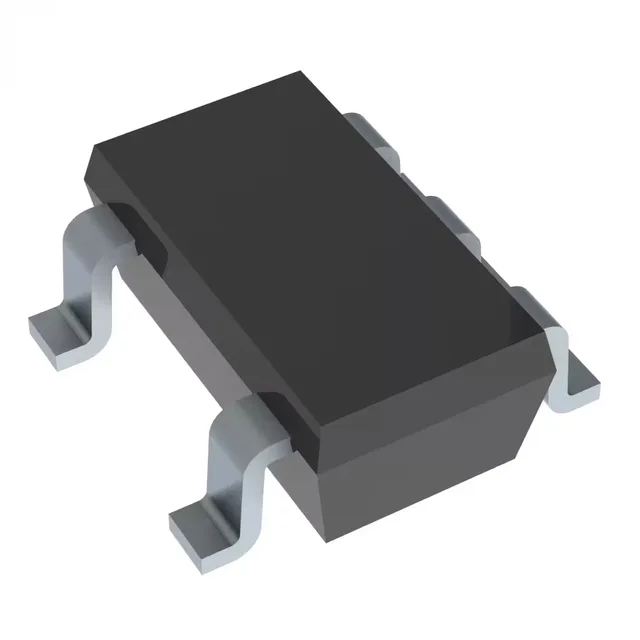
Texas Instruments TPS62205DBVR — Power Management (PMIC / Gate Driver)

TPS62205DBVR Texas Instruments Buck Regulator

MPNTPS62205DBVR
Active

Texas Instruments TPS62205DBVR step-down (buck) regulator, fixed 2.5V output, 300mA, 1MHz switching, synchronous rectifier, SOT-23-5 package, -40°C to 85°C.

$1.4600Ref. price · indicative, final on quote
PackagingSC-74A, SOT-753
RoHSROHS3 Compliant
Independent supplier — new & surplus stockAuthenticity-screened · ESD-safe packingListing updated Aug 2026

Specifications

TPS62205DBVR specifications
ParameterValue
Output typeFixed
MountingSurface Mount
Voltage - input2.5V
Voltage - output (Min (Fixed))2.5V
Output current300mA
Frequency1MHz
I/O channels1
Operating temperature-40°C~85°C(TA)
PackageTape & Reel (TR); Cut Tape (CT)
FunctionStep-Down
TopologyBuck
CaseSC-74A, SOT-753
Output configurationPositive
Synchronous rectifierYes

Product details

Sizing the 2.5V rail for a 300mA load

The TPS62205DBVR is a fixed 2.5V output step-down converter rated for 300mA continuous output — sized for powering a 2.5V logic rail, sensor supply, or MCU I/O bank on a board that already has a 2.5V to 6V input bus available. The integrated synchronous rectifier eliminates the external Schottky diode, which keeps the BOM count low and the efficiency curve flat across the load range — expect mid-80s to low-90s percent efficiency from light to full load.

Active production and compliance standing

RoHS3 compliant, with no exemptions that would block EU or California market entry. The SOT-23-5 package is lead-free compatible and reflow-ready per JEDEC J-STD-020.

Board-fit and thermal reality

The SC-74A / SOT-753 package is the same 5-lead SOT-23 footprint used across TI's low-power DC-DC family — the PCB land pattern is standard and shared with parts like the TPS62200 series, so a layout swap between fixed-voltage variants needs only a BOM change, not a board spin.

Frequently asked questions

Does TPS62205DBVR need an external Schottky diode?

No. The TPS62205DBVR integrates a synchronous rectifier, so the external Schottky diode required in older asynchronous buck designs is eliminated. This reduces BOM count and improves efficiency at light loads.