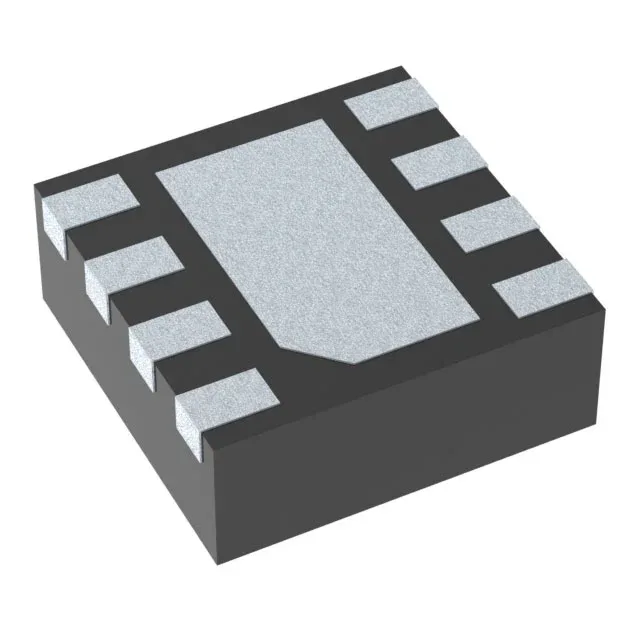
Texas Instruments TPS62171QDSGTQ1 — Power Management (PMIC / Gate Driver)

TPS62171QDSGTQ1 – Automotive Buck Regulator 500 mA 2.25 MHz

MPNTPS62171QDSGTQ1
Active

Texas Instruments, Automotive, AEC-Q100, DCS-Control™, 3–17 V input, 1.8 V fixed output, 500 mA synchronous buck regulator in 8-WFDFN exposed-pad package.

$1.8500Ref. price · indicative, final on quote
Packaging8-WFDFN Exposed Pad
RoHSROHS3 Compliant
SeriesAutomotive, AEC-Q100, DCS-Control™
Independent supplier — new & surplus stockAuthenticity-screened · ESD-safe packingListing updated Aug 2026

Specifications

TPS62171QDSGTQ1 specifications
ParameterValue
SeriesAutomotive, AEC-Q100, DCS-Control™
Output typeFixed
MountingSurface Mount
Voltage - input17V
Voltage - output (Min (Fixed))1.8V
Output current500mA
Frequency - switching2.25MHz
I/O channels1
Operating temperature-40°C~125°C(TJ)
PackageTape & Reel (TR); Cut Tape (CT)
FunctionStep-Down
TopologyBuck
Case8-WFDFN Exposed Pad
Output configurationPositive
Synchronous rectifierYes

Product details

AEC-Q100 buck for 1.8 V rails in tight spaces

The TPS62171QDSGTQ1 is a synchronous step-down regulator from the Automotive DCS-Control™ family, delivering a fixed 1.8 V output at up to 500 mA from a 3 V to 17 V input.

2.25 MHz switching and DCS-Control loop

At 2.25 MHz the fundamental switching frequency sits above the AM broadcast band, which simplifies EMI filtering in automotive EMC tests. The DCS-Control architecture combines hysteretic and voltage-mode control, giving fast transient response without external compensation components — the loop is stable with ceramic output capacitors.

Frequently asked questions

Does the TPS62171QDSGTQ1 require external compensation?

No. The DCS-Control™ architecture uses an internal compensation network that is stable with ceramic output capacitors. No external RC network is needed.

Can the TPS62171QDSGTQ1 convert 5 V to 1.8 V?

Yes. The input range is 3 V to 17 V, and the fixed output is 1.8 V. A 5 V rail to 1.8 V conversion at 500 mA is within the rated operating conditions.