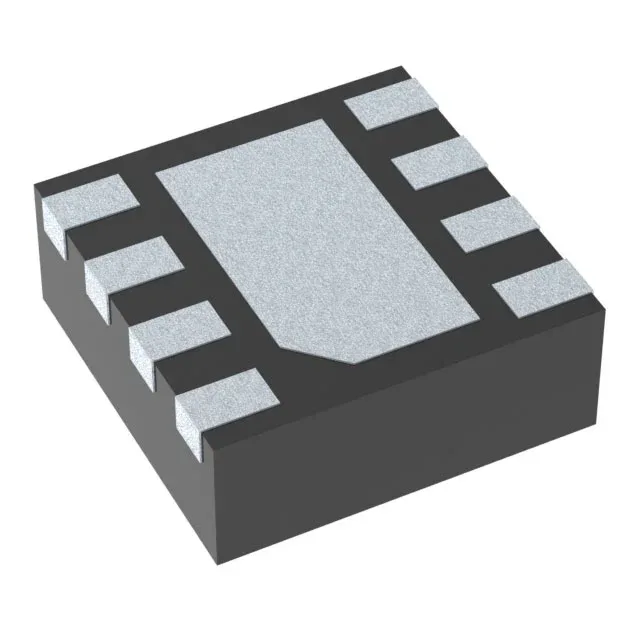
Texas Instruments TPS62162QDSGTQ1 — Power Management (PMIC / Gate Driver)

TPS62162QDSGTQ1 Automotive Buck Converter, 1A, 2.25MHz

MPNTPS62162QDSGTQ1
Active

Texas Instruments TPS62162QDSGTQ1, Automotive AEC-Q100 DCS-Control™ step-down buck converter, 3V to 17V input, fixed 3.3V output, 1A, 2.25MHz switching, 8-WFDFN exposed pad (2x2 mm WSON), -40°C to 85°C.

$2.0900Ref. price · indicative, final on quote
Independent supplier — new & surplus stockAuthenticity-screened · ESD-safe packingListing updated Jul 2026

Specifications

TPS62162QDSGTQ1 specifications
ParameterValue
SeriesAutomotive, AEC-Q100, DCS-Control™
Output typeFixed
MountingSurface Mount
Voltage - input17V
Voltage - output (Min (Fixed))3.3V
Output current1A
Frequency - switching2.25MHz
I/O channels1
Operating temperature-40°C~85°C(TA)
PackageTape & Reel (TR); Cut Tape (CT)
FunctionStep-Down
TopologyBuck
Case8-WFDFN Exposed Pad
Output configurationPositive
Synchronous rectifierYes

Product details

Automotive-rated 1 A buck in a 2x2 mm footprint

It delivers a fixed 3.3 V output at up to 1 A from an input range of 3 V to 17 V, switching at 2.25 MHz.

Input range and output — what the 3 V to 17 V window covers

The 17 V maximum handles nominal 12 V plus the typical load-dump clamp levels seen in 12 V systems. The fixed 3.3 V output is a common rail for powering the MCU, CAN transceiver, or sensor bias — no external resistor divider needed, which saves two components and one feedback-node noise path.

Package and thermal — the 2x2 mm WSON exposed pad

At 1 A output, the power dissipation depends on the input-to-output differential and the switching losses. Without that, the junction temperature rises quickly above 85°C ambient.

Frequently asked questions

What is the difference between TPS62162QDSGTQ1 and TPS62160?

The TPS62162QDSGTQ1 has a fixed 3.3 V output, while the TPS62160 has a fixed 5 V output. Both share the same 3 V to 17 V input range, 1 A output capability, 2.25 MHz switching frequency, and 8-WSON package. The choice comes down to which output voltage your load needs — no other parametric difference between the two.