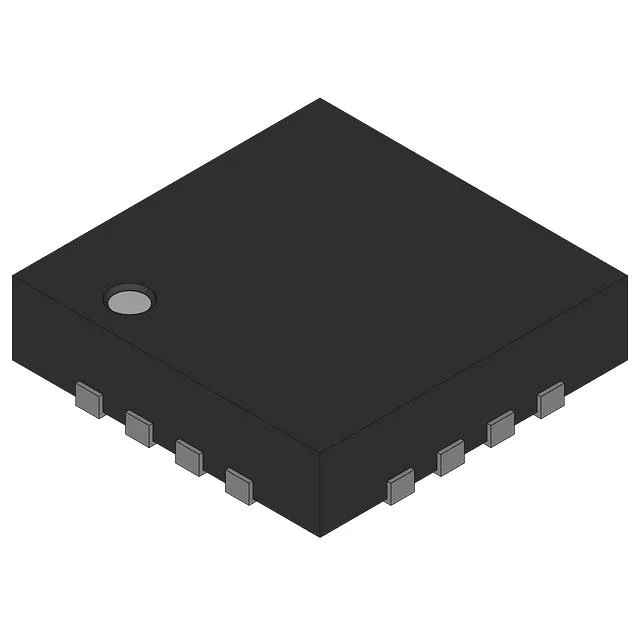
3.2 A synchronous buck — parametric fit for the rail
The TPS62134BRGTT is a DCS-Control™ step-down converter from Texas Instruments, delivering a programmable output from 0.7 V to 0.95 V at up to 3.2 A continuous from a 3 V to 17 V input rail. The 1 MHz fixed switching frequency and synchronous rectifier eliminate the external Schottky diode.
Output voltage window — why the 0.7 V to 0.95 V range matters
The output is programmable between 0.7 V and 0.95 V via an external resistor divider. That narrow window is deliberate — it targets low-voltage core rails for FPGAs, SoCs, or DSPs that need a tightly regulated 0.9 V or 0.85 V supply. The 0.7 V floor covers the lowest modern core voltages; the 0.95 V ceiling is the maximum safe level for 1.0 V-class logic. If your rail needs 1.2 V or 3.3 V, this is not the part — look at a wider-output adjustable buck in the same family.
Thermal and package — 16-VQFN with exposed pad
The 3×3 mm footprint is compact enough for space-constrained designs, but the thermal vias under the pad must be sized for the 3.2 A output — a 2-layer board with 1 oz copper and a 1-inch-square copper pour typically keeps the junction below 100°C at full load in still air.