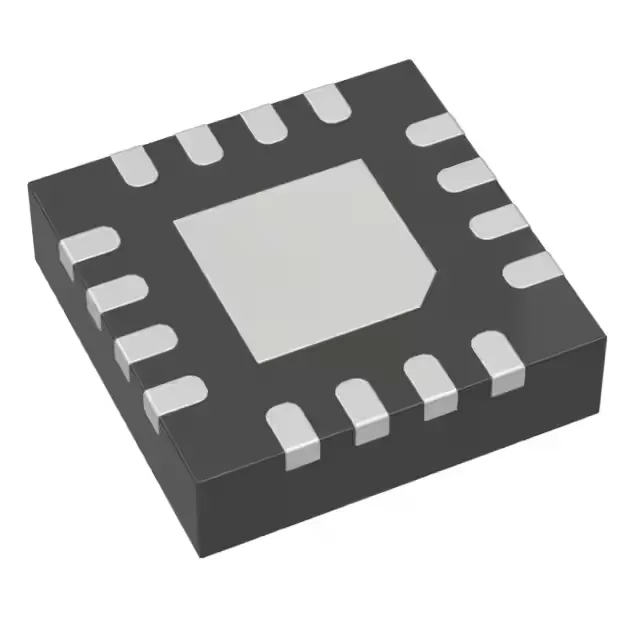
3A automotive buck in a 3x3 mm QFN
The Texas Instruments TPS62130AQRGTRQ1 is a 3A synchronous step-down converter from the automotive-qualified TPS6213x family, built around the DCS-Control topology. It takes a 3V to 17V input rail and delivers an adjustable output from 0.9V up to 6V, switching at 2.5 MHz. The 16-VQFN package with exposed pad (3x3 mm) keeps the footprint small enough for space-limited automotive modules like infotainment head units, ADAS sensor power, or ECU point-of-load rails.
2.5 MHz switching — inductor size trade-off
The 2.5 MHz switching frequency lets you use a smaller inductor and output capacitor than a 500 kHz regulator would need — think 1 µH to 2.2 µH in the 0805 or 1210 footprint. That saves board area, but the high-frequency edge rate demands careful layout: keep the input cap within 2 mm of the VIN pin and the inductor return path short to the exposed pad ground. The 3A output rating is continuous; the part can handle brief load transients above that, but the thermal limit in the 3x3 mm QFN will catch sustained overloads before the silicon does. The DCS-Control loop stays stable over that span with ceramic output caps — no need for bulk electrolytics or external compensation. That matters when the board sees vibration and thermal cycling; ceramics hold their value better than aluminium electrolytics over 10 years in a vehicle.
No last-time-buy notice, no end-of-life window to plan around. The base product number is TPS62130; the full suffix identifies the automotive-grade, RGT package, and the Q1 automotive qualification.
16-VQFN — thermal and assembly notes
The datasheet recommends a 2x2 array of vias under the pad to the ground plane — that drops the thermal resistance to around 40°C/W with a 2 oz copper pour. Without those vias, the junction temperature rises 20-30°C higher at 3A output, which can push you past the 125°C limit in a hot enclosure. The package is MSL-1, no bake needed before reflow if the bag seal is intact.