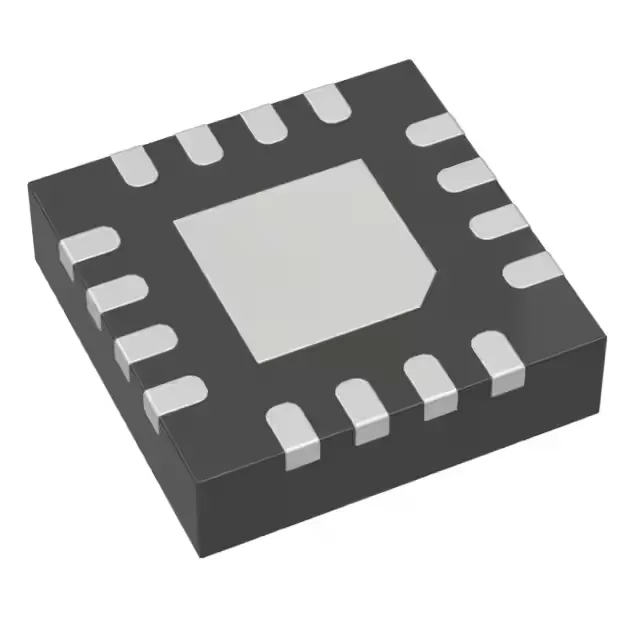
Texas Instruments TPS62091RGTT — Power Management (PMIC / Gate Driver)

TPS62091RGTT Buck Regulator, 3.3V Fixed Output, 3A, 2.8MHz

MPNTPS62091RGTT
Active

Texas Instruments DCS-Control™ series TPS62091RGTT, Step-Down Buck Regulator, Fixed 3.3V Output, 3A, 2.8MHz Switching, Synchronous Rectifier, 16-VFQFN Exposed Pad, -40°C to 85°C.

$2.9400Ref. price · indicative, final on quote
Packaging16-VFQFN Exposed Pad
RoHSROHS3 Compliant
SeriesDCS-Control™
Independent supplier — new & surplus stockAuthenticity-screened · ESD-safe packingListing updated Aug 2026

Specifications

TPS62091RGTT specifications
ParameterValue
SeriesDCS-Control™
Output typeFixed
MountingSurface Mount
Voltage - input2.5V
Voltage - output (Min (Fixed))3.3V
Output current3A
Frequency2.8MHz
I/O channels1
Operating temperature-40°C~85°C(TA)
PackageTape & Reel (TR); Cut Tape (CT)
FunctionStep-Down
TopologyBuck
Case16-VFQFN Exposed Pad
Output configurationPositive
Synchronous rectifierYes

Product details

What this regulator does on your rail

The Texas Instruments TPS62091RGTT is a 3 A synchronous step-down (buck) converter with a fixed 3.3 V output. It takes an input from 2.5 V up to 6 V and switches at 2.8 MHz.

At 3 A output, this is a mid-power rail regulator. Because the output is fixed at 3.3 V, the BOM loses the feedback resistor divider and the associated noise pickup path. That is a reliability win on a noisy board — one less node to decouple.

Frequently asked questions

What is the difference between TPS62091RGTT and TPS62091RGTR?

The difference is in the packaging and reel format — TPS62091RGTT is the Tape & Reel (TR) variant, while TPS62091RGTR is the Cut Tape (CT) version. The silicon and electrical specs are identical.

Does TPS62091RGTT require external compensation?

No. The DCS-Control topology integrates compensation internally, so no external RC network is needed. The BOM is just the input cap, output cap, and inductor.

Is TPS62091RGTT suitable for battery-powered applications?

Yes — the 2.5 V minimum input works with a single Li-ion cell down to its discharge cutoff, and the synchronous rectifier keeps efficiency high across the load range, which extends battery run time.