1.2 A step-down at 2 MHz — the parametric anchor
The TPS62080DSGR: Switching at 2 MHz, the converter keeps the inductor in the 1–2.2 µH range and the output ripple under 10 mV typical with a small ceramic output cap — a deliberate trade-off of switching loss for board area. The DCS-Control™ topology combines hysteretic and voltage-mode control, giving fast load-transient response without the compensation network a standard PWM regulator needs — useful when the load current jumps from 10 mA to 1 A in a few microseconds.
Package, temperature grade, and board integration
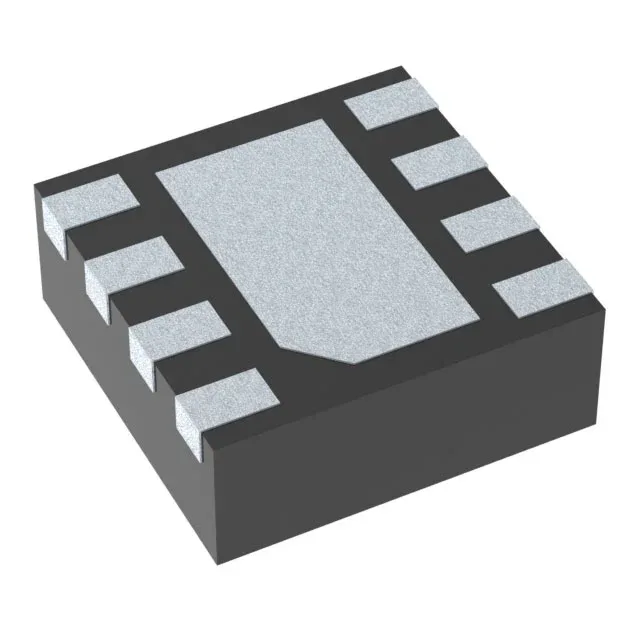
Housed in an 8-WSON (2x2 mm) exposed-pad package, the TPS62080DSGR sits on a single PCB layer with the thermal pad soldered to a ground plane — the junction-to-ambient thermal resistance depends on the copper area under the pad, not the package size. The synchronous rectifier (on-die FETs for both high-side and low-side) eliminates the external Schottky diode and keeps efficiency above 90% at moderate loads — the light-load efficiency curve is what matters for battery-powered designs.
Lifecycle and compliance — active, ROHS3, no PCN watch
ROHS3 compliant — the part meets the current EU restriction on hazardous substances, covering the full bill of materials including the exposed-pad plating.