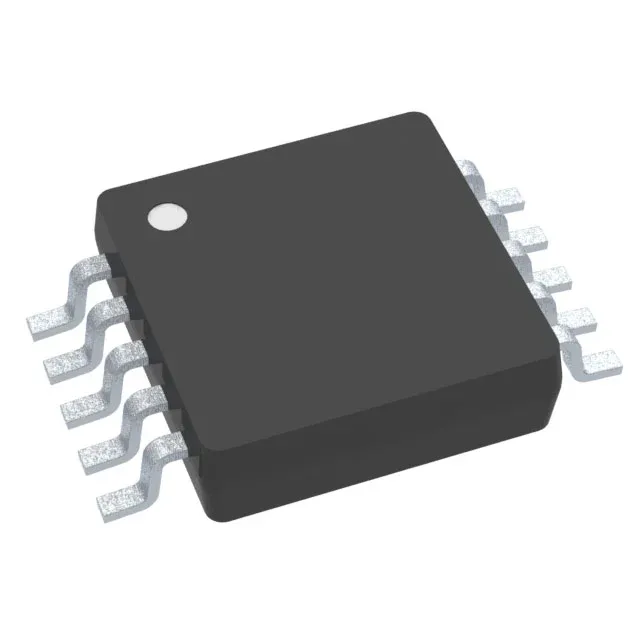
800 mA synchronous buck — sizing the rail for your load
The TPS62050DGSRG4 is a 800 mA adjustable step-down (buck) converter from Texas Instruments, switching at 850 kHz with an integrated synchronous rectifier. It accepts an input from 2.7 V to 10 V and regulates an adjustable output down to 0.7 V minimum. The synchronous rectifier improves efficiency at moderate loads — you get less heat in the pass element than a diode-rectified buck at the same current.
Input range and output ceiling — what the rails need to be
The 2.7 V minimum input lets this part run from a 3.3 V rail with margin for brownout, and the 10 V maximum covers 5 V and 9 V nominal buses. The adjustable output goes from 0.7 V up to 6 V — that 6 V ceiling means it cannot regulate a 12 V rail; it is sized for sub-6 V loads like logic, sensor, or I/O supplies. The single output delivers up to 800 mA continuous. If your load peaks above that, you need a higher-current part in the TPS620xx family; if the load is under 100 mA, the synchronous rectifier still keeps efficiency above 80 % across most of the range.
Temperature grade and package — board-fit checklist
The 10-VSSOP package (3.00 mm × 3.00 mm body, 0.50 mm pitch) fits a compact layout but demands a 4-layer board if you need a solid thermal via pattern under the exposed pad. The base product number is TPS62050; the DGS suffix denotes the VSSOP-10 package, and the RG4 suffix indicates the reel orientation and lead-free finish.