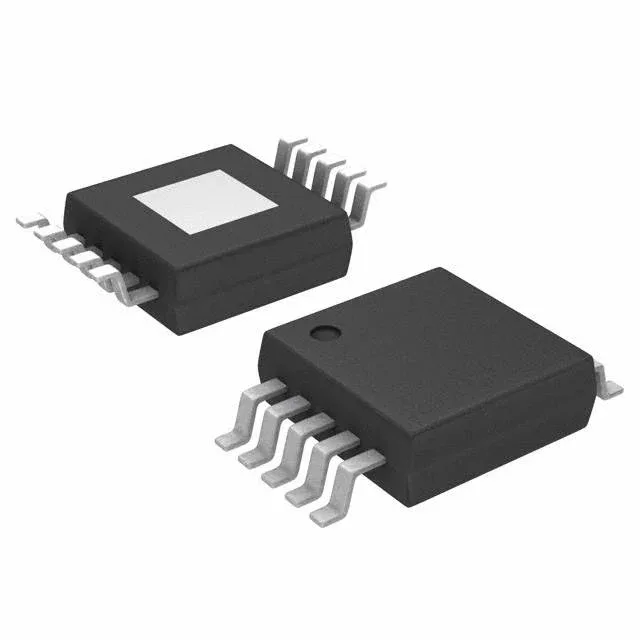
Texas Instruments TPS62020DGQ — Power Management (PMIC / Gate Driver)

TPS62020DGQ Texas Instruments Buck Regulator, 600mA, 10-MSOP

MPNTPS62020DGQ
Active

Texas Instruments TPS62020DGQ, a step-down buck regulator, adjustable output from 0.7V to 6V, 600mA output current, 1.25MHz switching frequency, in a 10-HVSSOP package, -40°C to 85°C operating range.

$2.3600Ref. price · indicative, final on quote
Packaging10-PowerTFSOP, 10-MSOP (0.118", 3.00mm Width)
RoHSROHS3 Compliant
Independent supplier — new & surplus stockAuthenticity-screened · ESD-safe packingListing updated Aug 2026

Specifications

TPS62020DGQ specifications
ParameterValue
Output typeAdjustable
MountingSurface Mount
Voltage - input2.5V
Voltage - output6V
Voltage - output (Min (Fixed))0.7V
Output current600mA
Frequency - switching1.25MHz
I/O channels1
Operating temperature-40°C~85°C(TA)
PackageTube
FunctionStep-Down
TopologyBuck
Case10-PowerTFSOP, 10-MSOP (0.118\", 3.00mm Width)
Output configurationPositive
Synchronous rectifierYes

Product details

Buck regulator for 2.5V to 6V rails

The TPS62020DGQ is a synchronous step-down (buck) regulator from Texas Instruments, delivering up to 600 mA from a 2.5V to 6V input rail. The adjustable output voltage can be set from 0.7V up to the input voltage, making it a fit for 3.3V or 5V bus conversion to lower core voltages. Switching at 1.25 MHz, the part allows small inductor and capacitor values, which keeps the BOM footprint tight on space-constrained boards.

The supplier device package is 10-HVSSOP.

Tape-and-reel variants (e.g., TPS62020DGQR) are also available for volume production.

Frequently asked questions

Is TPS62020DGQ compatible with a 3.3V input?

Yes. The input voltage range is 2.5V to 6V, so a 3.3V rail is well within the operating window. The part will regulate the output down to 0.7V from that input.

What is the difference between TPS62020DGQ and TPS62020DR?

The TPS62020DR is the same regulator in a different package — typically a smaller or alternate footprint. The DGQ variant uses the 10-HVSSOP package with an exposed thermal pad, while the DR variant may be in a different MSOP or SOIC package. Confirm the package code against your PCB footprint before substituting.