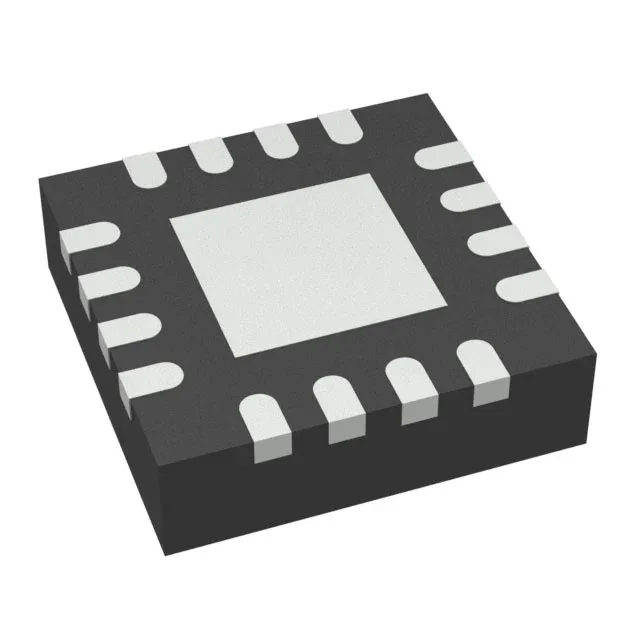
85 V output from a 3×3 mm QFN
That 85 V ceiling is the headline — you do not see that kind of boost ratio in a 16-pin WQFN package every day. It is meant for applications that need a high-voltage bias rail from a low-voltage source: LCD bias, PMOLED panels, avalanche photodiode bias, or piezo actuator supplies.
Switching frequency and rectifier choice
Switching frequency is fixed at 700 kHz. That is fast enough to keep the inductor small — a 4.7 µH to 10 µH part in the 0805 or 1210 footprint works — but not so fast that layout parasitics dominate the loop. The part uses an external diode (no synchronous rectifier), which means the efficiency peak sits at moderate loads and the BOM gets a Schottky diode rated for the output voltage plus margin. For an 85 V output, that means a 100 V Schottky or ultrafast diode in a SMA or SMB package.
The 16-WFQFN with exposed pad (3×3 mm body) is a QFN — no leads to inspect, so you rely on the solder-paste volume and the reflow profile. A preheat from the bottom at 100–120 °C helps the pad wet before the pins.
Temperature grade and operating range
That is the full industrial range with headroom for self-heating. The 125°C junction limit means the part can sit in an engine bay or outdoor enclosure as long as the ambient plus the temperature rise from the power dissipation stays under that ceiling. At high output voltage and current, the external diode and the inductor handle most of the heat, but the QFN's exposed pad still needs a solid thermal connection to the board.