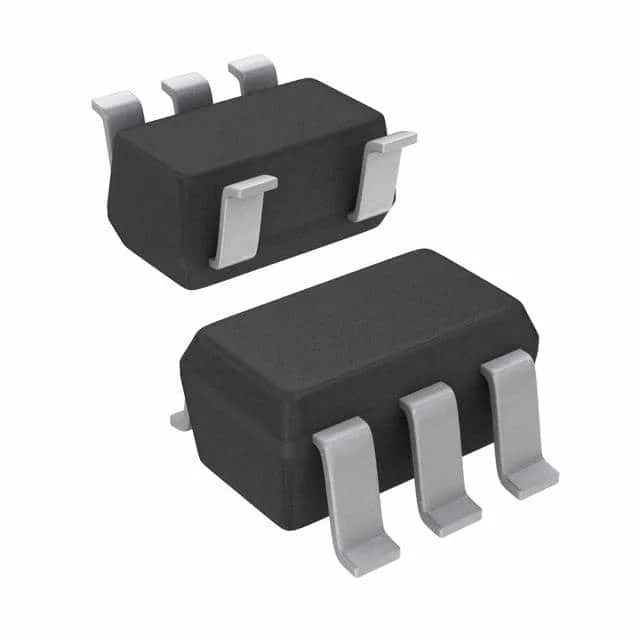
The TPS613223ADBVR is a fixed-output step-up (boost) converter from Texas Instruments that integrates a 1.2 A switch. That switch current rating sets the practical output power ceiling: at a 3.3 V output from a single Li-ion cell (3.6 V nominal), the converter can deliver roughly 1 A to the load before the switch current limit engages. For lower input voltages — down to 0.9 V from a nearly depleted alkaline cell — the available output current scales down proportionally, but the 1.2 A switch keeps the design in the range of powering a small sensor node or a Bluetooth module without an external MOSFET.
Switching frequency: inductor size vs. efficiency trade
At 500 kHz the converter runs with lower switching losses — better efficiency at light loads — but requires a larger inductor (typically 10 µH to 22 µH). At 2 MHz the inductor can shrink to 2.2 µH or 3.3 µH, saving board area, but the higher gate-drive losses reduce efficiency by a few points. The designer picks the frequency that matches the priority: board height or thermal budget.
Synchronous rectification cuts the BOM
The part includes an integrated synchronous rectifier, so no external Schottky diode is needed. That saves one component and one placement, and the synchronous switch improves efficiency by 2–5% compared to a diode-based boost at the same output current. The output voltage is fixed at 2 V, which suits low-voltage rails for logic or memory backup — not a general-purpose adjustable supply.
Housed in a SOT-23-5 (SC-74A) package, the part is a compact 5-pin surface-mount device. The SOT-23-5 footprint is widely second-sourced, making board layout straightforward.