Boost converter for single-cell Li-ion and USB OTG rails
The input range spans 2.3 V to 4.85 V, covering the full discharge curve of a Li-ion battery down to the 3.0 V cutoff and extending into the 2-cell alkaline territory. Output voltage is programmable from a 2.85 V minimum up to 4.4 V maximum, suiting it for powering the core voltage of portable SoCs, RF power amplifiers, or USB On-The-Go (OTG) VBUS at 5 V (via external resistor divider). The 2.3 MHz switching frequency keeps the inductor and output capacitor small, which matters for the 16-DSBGA (1.67x1.67 mm) footprint.
5 A switch current and synchronous rectification
The 5 A switch current rating sets the practical output power ceiling: at a 3.3 V output from a 3.7 V Li-ion input, the converter can deliver roughly 1.5 A continuous before the switch current limit is hit, assuming typical efficiency. The synchronous rectifier improves light-load efficiency by replacing the freewheeling diode with a low-Rds(on) FET — a meaningful gain for battery-powered designs that spend most of their time in standby or low-current modes.
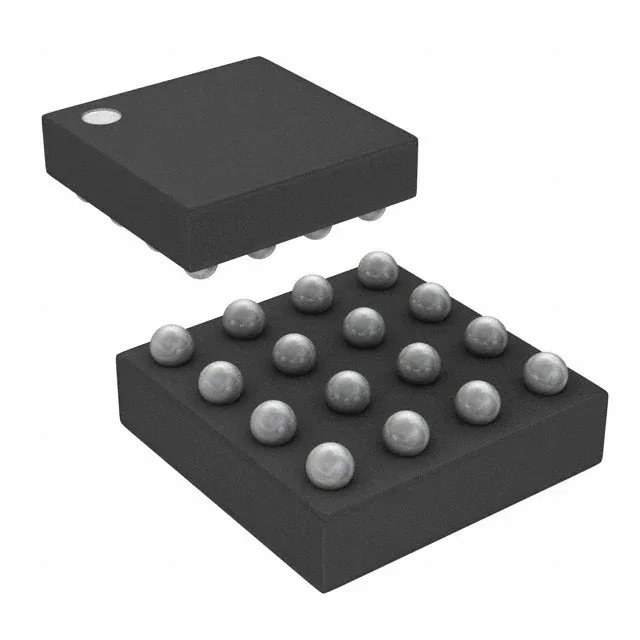
Housed in a 16-pin DSBGA (1.67 x 1.67 mm) with 0.5 mm pitch, the TPS61280DYFFT demands a controlled impedance PCB layout and good thermal management via the board's copper planes — no exposed pad, so the die heat flows through the solder balls into the inner layers.