5 A switch, 2.3 MHz boost — what it delivers
A single-output step-up (boost) converter with a 5 A integrated switch — the switch current rating sets the maximum deliverable output current, derated by the input-to-output voltage ratio and efficiency. Switching frequency is 2.3 MHz, which allows small inductor values (typically 1 µH to 2.2 µH) and keeps the output ripple within a tight band, but the high frequency also increases switching losses in the pass FET. Output is programmable from a minimum fixed 2.85 V up to 4.4 V, with positive configuration — the feedback divider sets the regulation point.
Package and temperature — board-fit realities
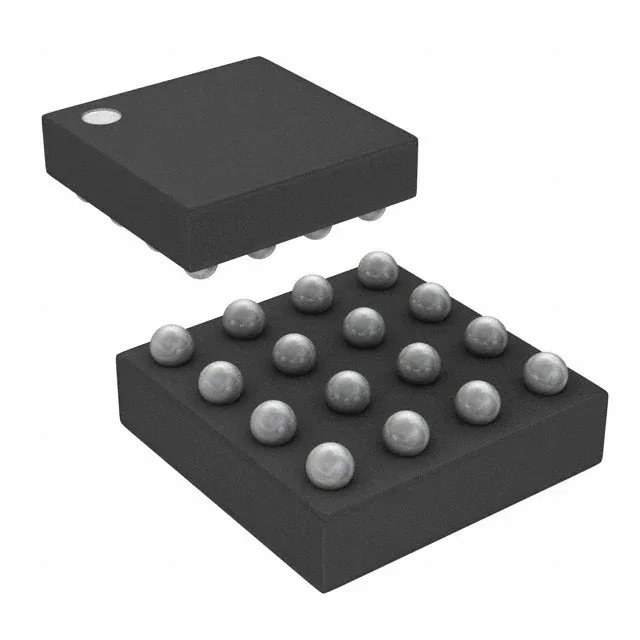
Not a hand-solderable part. Synchronous rectifier built in — improves efficiency at moderate to heavy loads by replacing the freewheeling diode with a low-Rds(on) FET.
Input voltage range and application fit
Input range is 2.3 V to 4.85 V — covers single-cell Li-ion (3.0 V to 4.2 V typical), two-cell alkaline, or a regulated 3.3 V rail. Below 2.3 V the converter does not start; above 4.85 V the input overvoltage protection engages.