What this boost converter does for a single-cell Li-ion rail
The TPS61259YFFR is a fixed 5.1 V output boost converter from Texas Instruments, built for generating a clean 5 V rail from a single Li-ion cell (2.65 V to 4.85 V input range). The 3.9 A switch current rating means it can deliver over 2 A at 5.1 V from a 3.6 V input — enough to power a Raspberry Pi Zero or a string of USB peripherals from a battery pack.
The 3.9 A switch current is the peak current the internal NMOS switch can handle cycle-by-cycle. In a boost converter, the average input current is lower than the switch peak, but the difference depends on the inductor ripple. At 3.6 V input and 5.1 V output, the part can deliver about 2.2 A to the load before hitting the switch current limit — useful for high-current bursts like USB enumeration or motor startup.
Lifecycle and sourcing — active, but the package is the gate
This is not a part you hand-solder in the field; it belongs on a pick-and-place line with a stencil. Cut Tape (CT) and Tape & Reel (TR) options are available for prototyping and production.
Package and layout — the DSBGA footprint demands attention
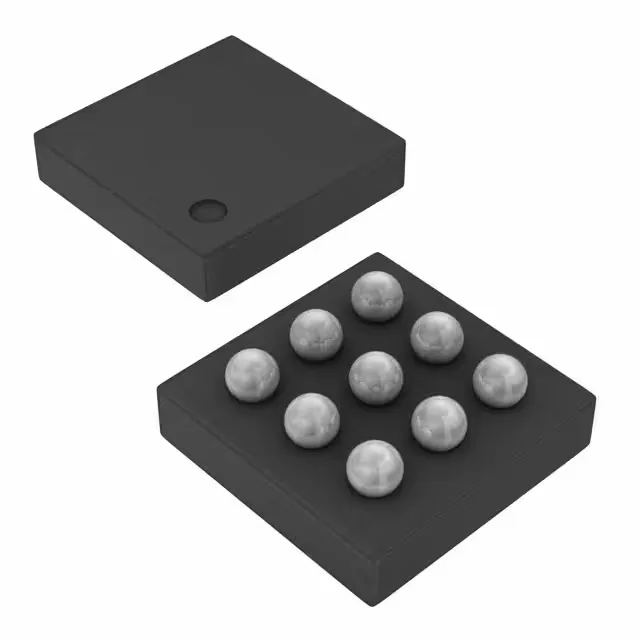
The 9-DSBGA package has a 0.5 mm ball pitch and a 1.2 mm × 1.2 mm body. The input and output capacitors must sit within 2 mm of the package to keep the high-frequency loop small — the 3.5 MHz switching edges are fast enough to radiate if the layout is loose.