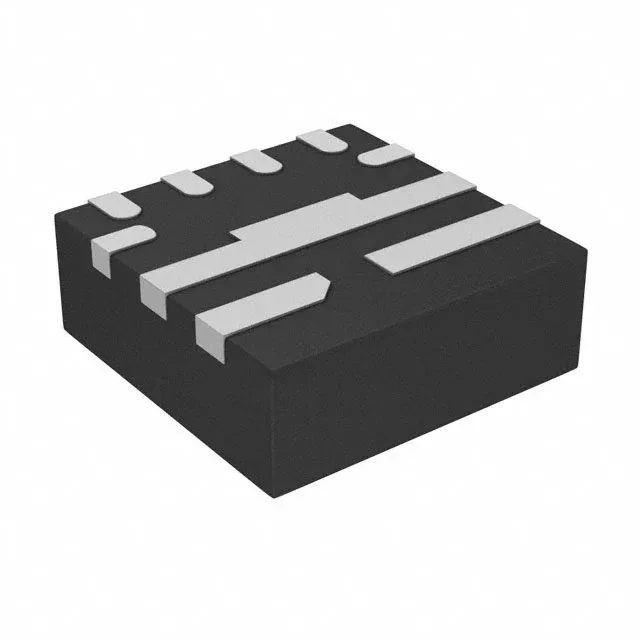
The Texas Instruments TPS61236PRWLR is a synchronous boost converter that integrates a 6.5A switch in a 9-VFQFN-HR package measuring 2.5x2.5 mm. That switch current rating is the headline number: it tells you the inductor peak current the part can handle before the cycle-by-cycle current limit folds back. For a typical 3.3V to 5V conversion at 2A output, the inductor peak sits around 4A — leaving margin before the 6.5A limit, which keeps the design out of current-limit foldback during load transients. Input range runs from 2.3V up to 4.9V, so this part works from a single Li-ion cell (3.0-4.2V), two alkaline cells in series (2.4-3.0V), or a regulated 3.3V or 5V bus. The minimum 2.3V input lets it keep running as the battery discharges below 3V, which is where many boost converters drop out. Output is adjustable from a 2.9V minimum up to 5.5V maximum, covering the common 3.3V and 5V rails plus intermediate voltages for USB OTG or sensor bias. The 1MHz switching frequency keeps the inductor and output capacitor small — a 2.2 µH to 4.7 µH shielded inductor is typical for this class.
125°C junction and synchronous rectification
The 125°C Tj limit sets the derating curve: at 105°C ambient the available output current is lower than at 25°C, so the thermal budget needs to be checked against the load profile. The single positive output with adjustable feedback gives flexibility for non-standard voltages, but the 2.9V minimum output means this part cannot generate a 1.8V or 2.5V rail — that would require a different topology. For a 5V output at 2A, the 6.5A switch rating provides about 30% headroom above the calculated peak current, which is a comfortable margin for transient response without oversizing the inductor.
The part is surface-mount, so the standard reflow profile for a 9-VFQFN applies; no special moisture sensitivity level is listed in this record, but the small 2.5x2.5 mm pad array is straightforward for a pick-and-place line.