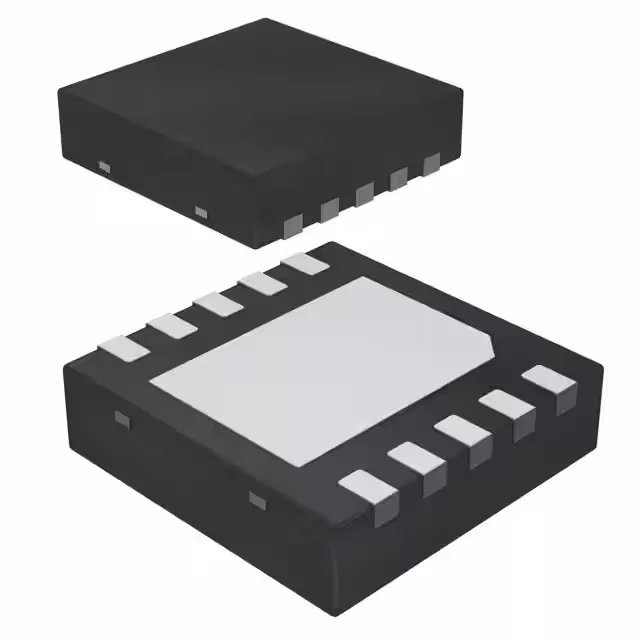
0.3 V startup, fixed 5 V rail — what this boost converter delivers
The Texas Instruments TPS61202DSCR is a synchronous step-up (boost) converter that takes an input as low as 0.3 V and delivers a fixed 5 V output. It integrates a 1.2 A switch and uses synchronous rectification, so no external Schottky diode is needed on the output. The switching frequency runs between 1.25 MHz and 1.65 MHz, keeping the inductor and output capacitor small. This part is aimed at battery-powered systems where the input voltage drops below 1 V — think single-cell alkaline, NiMH, or Li-ion cells near end-of-discharge — and a regulated 5 V rail is required for USB, sensor supplies, or small logic loads.
Input floor and switch current — the real load budget
The 0.3 V minimum input voltage is the headline spec for energy-harvesting or deeply discharged battery designs. At that low voltage the available output current is limited by the 1.2 A switch current rating and the boost ratio. The fixed 5 V output means no external feedback divider — just the inductor, input/output caps, and the chip. That simplifies the BOM and removes one trim point in production.
For volume commitments or scheduled releases, we quote against the BOM quantity at time of order — no stock-holding claim, no immediacy promise. The base product number is TPS61202. The DSCR suffix denotes the tape-and-reel / cut-tape shipping format.